| S.N | Carotenoids | Molecular Formula | Molecular Weight | Other Names | Structure | Sources | Biological Functions | Applications | Reactions | Toxicity | Patents | Link to other databases | References | Publication Hyperlink | Effectivity against diseases | Scientific Articles/Papers |
|---|---|---|---|---|---|---|---|---|---|---|---|---|---|---|---|---|
| 1 | β-Carotene | C40H56 | 536.848 g/mol | beta,beta-Carotene | 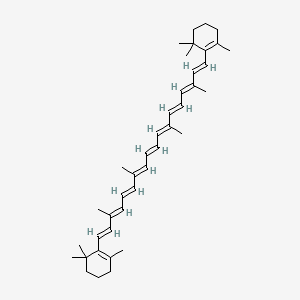 |
Halobacterium cutirubrum, Haloarcula japonica, Rhodomonas D3, Euglena rubida mainx, Euglena gracilis var. bacillarus, Euglena gracilis, Euglena sanguinea, Euglena viridis, Eutreptiella gymnastica, Coccolithus huxleyi, Hymenomonas carterae, Isochrysis galbana, Pavlova lutheri, Phaeocystis sp., Prymnesium parvum, Ochromonas sp., Chromulina ochromonoides, Poterioochromonas malhamensis, Synura petersenii, Pelagococcus subviridis, Sarcinochrysis marina Getler, Olisthodiscus luteus, Nitzschia sp., Navicula pelliculosa, Phaeodactylum tricornutum, Skeletonema menzelii, Skeletonema costatum, Thalassiosira oceanica, Thalassiosira pseudonana, Thalassiosira eccentrica, Thalassiosira rotula, Grammatophora oceanica
Ascophyllum nodosum, Fucus serratus, Fucus vesiculosus, Pelvetia canaliculata, Laminaria saccharina, Laminaria digitata
Spinacia oleracea L., Arabidopsis thaliana, Capsicum annuum var. lycopersiciforme flavum, Lycium barbarum, Lycium chinense, Passiflora edulis, Ipomoea batatas Lam., Coffea canephora, Coffea arabica, Averrhoa carambola, Diospyros kaki, Rosa gallica officinalis, Carica papaya, Bixa orellana, Mangifera indica, Boronia megastigma, Cucumis melo Inodorus Group, Citrullus vulgaris, Calendula officinalis, Elaeis spp., Camellia sinensis
Xanthophyllomyces dendrorhous, Rhodotorula minuta
Macrosiphum liriodendri, Galleria mellonella, Coccinella septempunctata, Extatosoma tiaratum, Xantho poressa
Suberites sericeus, Suberites domuncula, Microciona prolifera, Gelliodes callista, Plesiocolochirus minutus
|
β-carotene is a photosynthetic pigment in the higher plants and cyanobacteria. It acts as a photoprotective agent and is a major component of the light-harvesting complexes and reaction center complexes of photosystem II and I. | β-carotene is a potential antioxidant, 101 times more effective than α-tocopherol. It also possesses anti-apoptotic properties, as the retinoid acids derived from β-carotene bind with retinoid acid receptors and dimerize retinoid X receptors, providing neuroprotection against apoptosis. It possesses anti-cancer properties and promotes cell differentiation. It also boosts immune responses in humans and animals. It is a vitamin A precursor. |
1. β-carotene → β-Apo-10'-carotenal (Enzyme: carotenoid-9',10'-cleaving oxygenase) 2. β-carotene → C14 aldehyde (Enzyme: carotenoid-10,11-cleaving dioxygenase) 3. β-Carotene + O2 → β-apo-14'-carotenonal (Enzyme: carotenoid isomerooxygenase; all-trans-8'-apo-beta-carotenal 15,15'-oxygenase) |
No teratogenicity, reproductive toxicity, or embryotoxicity has been observed in experimental animals. However, it may cause irritation, and thus 0-5mg/kg is the acceptable daily intake. | β-carotene | β-carotene Database |
1. Shumin Jiang, Xueli Wu, Yi Wang, Jingtao Zou, Xiaoping Zhao. The potential DPP-4 inhibitors from Xiao-Ke-An improve the glucolipid metabolism via the activation of AKT/GSK-3β pathwaym 2020 Sep; 882:173272 2. Li-Jen Lin, Chin-Jen Wu, Shulhn-Der Wang, Shung-Te Kao. Qi-Wei-Du-Qi-Wan and its major constituents exert an anti-asthmatic effect by inhibiting mast cell degranulation, 2020 May; 254:112406 3. Sevim Tunali, Tunc Catal, Sehnaz Bolkent, Refiye Yanardag. The effects of vitamins and selenium mixture against brain tissue induced by d-galactosamine, 2019 Aug; 33(8):e22347 4. Ji-Sun Kim, Woo-Moon Lee, Han Cheol Rhee, Suna Kim. Red paprika (Capsicum annuum L.) and its main carotenoids, capsanthin and β-carotene, prevent hydrogen peroxide-induced inhibition of gap-junction intercellular communication, 2016 Jul; 254(?):146-55 5. Xiangzhan Zhu, Yanting Zhang, Qinghua Li, Lu Yang, Nannan Zhang, Shanshan Ma, Kun Zhang, Jishi Song, Fangxia Guan. β-Carotene Induces Apoptosis in Human Esophageal Squamous Cell Carcinoma Cell Lines via the Cav-1/AKT/NF-κB Signaling Pathway, 2016 Mar; 30(3):148-57 |
β-Carotene Publications | Breast cancer lung cancer Cervical cancer Prostate cancer Melanoma Leukemia Colorectal Cancer Ovarian cancer non-Hodgkin lymphoma Pancreatic cancer Gastric cancer Parkinson's Disease Alzheimers Disease Amyotrophic Lateral Sclerosis Diabetes Dengue COVID-19 Diabetic cardiomyopathy Liver fibrosis Atopic dermatitis Photoaging Multiple Sclerosis Crohn's Disease Ulcerative Colitis Osteoporosis Depression Anxiety Hepatitis Obesity Nutraceutical | breast cancer lung cancer Cervical cancer Prostate cancer Leukemia Colorectal Cancer Ovarian cancer non-hodgkin lymphoma Pancreatic cancer Gastric cancer neurodegenerative Diabetes Dengue COVID-19 and Diabetic cardiomyopathy Liver fibrosis Multiple Sclerosis Crohn Disease Ulcerative Colitis Osteoporosis depression Anxiety hepatitis Obesity Nutraceutical |
| 2 | Lycopene | C40H56 | 536.848 g/mol | Lycopene (all-E)-Lycopene psi,psi-Carotene |  |
Haloarcula japonica, Halorubrum chaoviator Halo-G, Thiodictyon strain 3011, Lamprocystis roseopersicina, Thermus thermophilus, Sorangium compositum, Rhodopseudomonas palustris, Rhodobacter capsulatus, Phaeospirillum sp., Roseospira sp., Nostoc sp. PCC 7120, Oscillatoria princeps, Dunaliella salina, Cryptomonas ovata
Passiflora edulis, Diospyros kaki, Carica papaya, Citrullus vulgaris, Calendula officinalis, Elaeis spp.
None mentioned
Coccinella septempunctata, Homo sapiens
|
In plants, lycopene has been speculated to confer antioxidant protection against photosystemic events, appear in chromoplasts during maturation, and enhance attraction, consumption, and seed dispersal by herbivores. | Lycopene is known as a potential photoprotective agent, antioxidant, and a radioprotector against cell damage caused due to gamma radiations. It also possesses antiradical activity and slows down IGF-1 stimulated cell cycle progression, thus possessing anti-carcinogenic activity. It is also an anti-fungal, anti-microbial, anti-inflammatory, and anti-apoptotic agent. Lycopene also promotes cell proliferation by the upregulation of the Connexin43 gene. It is used to treat depression and post-traumatic stress disorder. |
1. Lycopene → Pseudoionone (Enzyme: carotenoid 9,10-dioxygenase) 2. Lycopene + Acceptor → 3,4-Didehydrolycopene + Reduced acceptor (Enzyme: Phytoene desaturase; 15-Cis-phytoene:acceptor oxidoreductase) 3. Lycopene + H2O → 1-Hydroxy-1,2-dihydrolycopene (Enzyme: lycopene hydro-lyase (1-hydroxy-1,2-dihydrolycopene-forming)) |
No significant toxic effects were observed. | Lycopene | Lycopene Database |
1. Collins J K, Perkins-Veazie P, & Roberts W (2006). Lycopene: From Plants to Humans, HortScience, Volume 41: Issue 5 2. Yang Kun, Umar Ssonko Lule & Ding Xiao-Lin (2006) Lycopene: Its Properties and Relationship to Human Health, Food Reviews International, 22:4, 309-333 3. Marwa A A Ibrahim, Heba H Elkaliny, Marwa M Abd-Elsalam. Lycopene ameliorates the effect of Aroclor 1254 on morphology, proliferation, and angiogenesis of the thyroid gland in rat, 2021 03; 452:152722 |
Lycopene Publication | Breast cancer lung cancer Cervical cancer Prostate cancer Colorectal Cancer Pancreatic cancer Gastric cancer Parkinson's Disease Alzheimers Disease Stroke Diabetes malaria Dengue COVID-19 Atherosclerosis Emphysema Hepatic disorders Non-Alcoholic Fatty Liver Disease Atopic dermatitis Psoriasis Photoaging Obesity Pancreatitis Nutraceutical epilepsy | breast cancer lung cancer Cervical cancer Prostate cancer Colorectal Cancer Pancreatic cancer Gastric cancer neurodegenerative Diabetes Malaria Dengue COVID-19 Atherosclerosis NAFLD Hepatic disorder Obesity Pancreatitis Nutraceutical epilepsy |
| 3 | α-Carotene | C40H56 | 536.848 g/mol | astaxanthin, 3,3'-Dihydroxy-beta,beta-carotene-4,4'-dione | 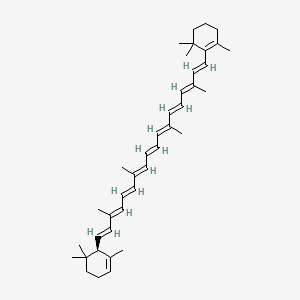 |
Halobacterium cutirubrum, Prochlorococcus marinus, Prochlorococcus marinus strain CCMP 1986, Prochlorococcus marinus strain CCMP 1375, Prochlorococcus marinus strain CCMP 2773, Chlamydomonas reinhardtii, Protosiphon botryoides, Dunaliella salina, Ankistrodesmus spp., Pleurastrum paucicellulare, Tetraselmis wettsteinii, Tetraselmis sp.
Scinaia confusa, Scinaia latifrons, Rhodymenia palmata, Fauchea galapagensis, Rhodymenia californica, Bangia alropurpurea, Porphyra perforata, Iridaea chordata, Chondracanthus canaliculatus, Chondracanthus exasperatus, Chondracanthus spinosus, Chondracanthus squarrulosus, Chondracanthus corymbiferus, Mazzaella affinis, Mazzaella flaccida
Capsicum annuum var. lycopersiciforme flavum, Coffea canephora, Coffea arabica, Diospyros kaki, Elaeis spp., Chara tomentosa, Chara hispida, Chara globularis, Nitella opaca, Spinacia oleracea L.
Protousnea sp.
Galleria mellonella, Extatosoma tiaratum, Corbicula clams, Corbicula japonica, Corbicula sandai, Homo sapiens
Agelas schmidtii, Microciona prolifera
|
The xanthophyll pigments derived from α-carotene play a vital role in photoprotection. Being a structural part of the light harvesting complexes, mutations in the α-carotenoid biosynthesis lead to lower non-photochemical quenching. | α-Carotene is widely known for its anti-carcinogenic and antioxidant properties. Its cancer preventive properties are stronger than beta-carotene and it has a SOAC value of 87.5. |
1. α-carotene + O2 → (11Z)-Retinal (Enzyme: carotenoid-15,15'-cleaving oxygenase) 2. α-Carotene + Reduced acceptor + O2 → α-Cryptoxanthin + Acceptor + H2O (Enzyme: carotene epsilon-monooxygenase) 3. α-Carotene + NADH + O2 → Zeinoxanthin + NAD+ + H2O (Enzyme: beta-carotene 3-hydroxylase; beta-carotene 3,3'-monooxygenase) |
No toxic effects have been observed. | α-Carotene | α-Carotene Database |
1. Zhang, L., Ma, G., Shirai, Y. et al. Expression and functional analysis of two lycopene β-cyclases from citrus fruits. Planta 236, 1315–1325 (2012). 2. Krishna K. Niyogi, Olle Björkman, and Arthur R. Grossman(1997). The roles of specific xanthophylls in photoprotection, PLANT BIOLOGY, 94(25) 3. Institute of Medicine (US) Panel on Dietary Antioxidants and Related Compounds. Dietary Reference Intakes for Vitamin C, Vitamin E, Selenium, and Carotenoids. Washington (DC): National Academies Press (US); 2000. 8, β-Carotene and Other Carotenoids. |
α-Carotene Reference | Breast cancer lung cancer Prostate cancer Colorectal Cancer non-Hodgkin lymphoma Parkinson's Disease Alzheimers Disease COVID-19 Photoaging Nutraceutical | breast cancer lung cancer Prostate cancer Colorectal Cancer non-hodgkin lymphoma neurodegenerative COVID-19 Nutraceutical |
| 4 | Zeaxanthin | C40H56O2 | 568.848 g/mol | Zeaxanthin; (3R,3'R)-Zeaxanthin, (3R,3'R)-beta,beta-Carotene-3,3'-diol | 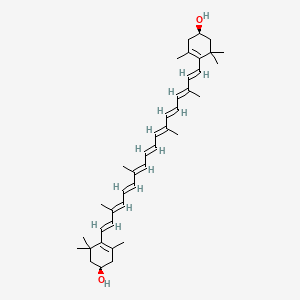 |
Sphingobacteriaceae sp., Thermus thermophilus, Thermus filiformis, Sphingomonadaceae sp., Erythrobacter flavus strain KJ5, Erythrobacter longus, Erythrobacter nanhaesediminis, Halomicronema hongdechloris, Prochloron sp., Prochlorococcus marinus, Prochlorothrix hollandica strain PCC 9006, Acaryochloris marina strain MBIC 11017, Acaryochloris sp. strain Awaji, Synechocystis sp., Merismopedia punctata, Calothrix parietina, Synechococcus elongatus, Anacystis nidulans, Synechococcus leopoliensis, Arthrospira sp., Microcoleus vaginatus, Oscillatoria rubescens, Oscillatoria agardhii, Planktothrix agardhii, Microcystis aeruginosa, Coccochloris elabens, Aphanizomenon gracile, Mastigocladus laminosus, Anabaena aerulosa oscillatorioides, Anabaena cylindrica, Anabaena variabilis, Nostoc commune, Nostoc sp. PCC 7120, Oscillatoria amoena, Oscillatoria limosa, Phormidium ectocarpi, Phormidium foveolarum, Phormidium lucidum, Phormidium percicinum, Tolypothrix tenuis
Cyanophora paradoxa, Glaucocystis nostochinearum, Cyanidioschyzon merolae, Porphyridium aerugineum, Porphyridium cruentum, Bangia alropurpurea, Porphyra perforata, Porphyra thuretii, Bangia fuscopurpurea, Gigartina stellata, Chondracanthus volans, Mazzaella accida, Iridaea chordata, Mazzaella leptorhynchus, Chondracanthus canaliculatus, Chondracanthus exasperatus, Chondracanthus spinosus, Chondracanthus squarrulosus, Chondracanthus harveyanus, Chondracanthus corymbiferus, Mazzaella affinis, Mastocarpus papillatus, Eucheuma uncinatum, Grateloupia setchelii, Prionitis lyalii, Prionitis cornea, Plocamium violaceae, Plocamium cartilagineum
Arabidopsis thaliana, Capsicum annuum var. lycopersiciforme flavum, Lycium barbarum, Lycium chinense, Passiflora edulis, Coffea canephora, Coffea arabica, Diospyros kaki, Bixa orellana, Mangifera indica, Boronia megastigma, Citrus reticulata
Protousnea sp., Cladonia sp.
Galleria mellonella, Corbicula clams, Corbicula japonica, Corbicula sandai, Fusinus perplexus, Clione limacina, Paedoclione doliiformis, Limacina helicina
Agelas schmidtii, Gelliodes callista
|
Zeaxanthin is majorly found in higher plants where it acts as a photosynthetic pigment. It is also found in the Photosystem I of some red algae. It is a major part of the xanthophyll cycle. It also acts as a membrane stabilizer in the chloroplasts. | It possesses strong anti-carcinogenic, photoprotective, antioxidant, anti-apoptotic, and anti-amyloid aggregation properties. It is often used as a yellow colorant. |
1. Zeaxanthin + 2 O2 → crocetin dialdehyde + 2 (3S)-3-hydroxycyclocitral (Enzymes: zeaxanthin 7,8-dioxygenase; zeaxanthin 7,8(7',8')-cleavage dioxygenase) 2. Zeaxanthin + O2 → (3R)-11-cis-3-hydroxyretinal + (3R)-all-trans-3-hydroxyretinal (Enzymes: carotenoid isomerooxygenase; zeaxanthin:oxygen 15,15'-oxidoreductase) |
No toxic effects were observed for doses below 400 mg/kg bw/day. | Zeaxanthin | Zeaxanthin Database |
1. Chen M, Li Y, Birch D, Willows RD., A cyanobacterium that contains chlorophyll f--a red-absorbing photopigment, FEBS Lett. 2012 Sep 21;586(19) 3249-54., PMID 22796191 DOI 10.1016/j.febslet.2012.06.045 2. Mandelli, F., Miranda, V. S., Rodrigues, E., Mercadante, A. Z., Identification of carotenoids with high antioxidant capacity produced by extremophile microorganisms, World Journal of Microbiology & Biotechnology (2012), 28(4), 1781-1790. |
Zeaxanthin Reference | lung cancer Melanoma Colorectal Cancer non-Hodgkin lymphoma Parkinson's Disease Alzheimers Disease COVID-19 Liver fibrosis Nutraceutical | lung cancer Colorectal Cancer non-hodgkin lymphoma neurodegenerative COVID-19 Liver fibrosis Nutraceutical |
| 5 | astaxanthin | C40H52O4 | 596.816 g/mol | Astaxanthin 3,3'-Dihydroxy-beta,beta-carotene-4,4'-dione | 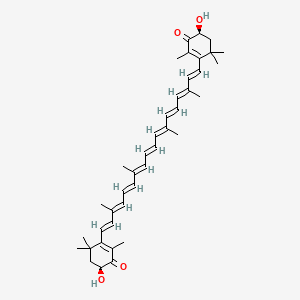 |
"Cladonia sp. Plesiocolochirus minutus " | astaxanthin is a stronger anti-oxidant than many other carotenoids. | Possessing strong anti-oxidant, anti-lipid peroxidative and anti-inflammatory properties it has diverse medical applications. It is also known for its anti-diabetic, anti-cancer and cardiovascular ailment preventing properties. | 1. Astaxanthin + superoxide anion radicals/hydroxyl radicals → Astaxanthin 5,6-epoxide Enzyme: Carotenoid 5,6-epoxidase 2. Astaxanthin + superoxide anion radicals/hydroxyl radicals → Astaxanthin 5,8-epoxide Enzyme: Carotenoid 5,8-epoxidase 3. Astaxanthin + singlet oxygens → Astaxanthin-5,6-peroxide Enzyme: Carotenoid 5,6-peroxidase | When consumed with food, Astaxanthin is safe and no adverse effects are known. However, excess consumption may lead to reddish to yellow skin pigmentation. | Astaxanthin | Astaxanthin Database | 1. Huang L, Liu J, Li W, Liu F, Wan M, Chen G, Su M, Guo C, Han F, Xiong G, Liao X, Lu H, Cao Z. Lenvatinib exposure induces hepatotoxicity in zebrafish via inhibiting Wnt signaling. Toxicology. 2021 Oct;462:152951. doi: 10.1016/j.tox.2021.152951. Epub 2021 Sep 15. PMID: 34534561. 2. Lim SR, Kim DW, Sung J, Kim TH, Choi CH, Lee SJ. Astaxanthin Inhibits Autophagic Cell Death Induced by Bisphenol A in Human Dermal Fibroblasts. Antioxidants (Basel). 2021 Aug 11;10(8):1273. doi: 10.3390/antiox10081273. PMID: 34439521; PMCID: PMC8389241. 3. Mohammadi S, Barzegari A, Dehnad A, Barar J, Omidi Y. Astaxanthin protects mesenchymal stem cells from oxidative stress by direct scavenging of free radicals and modulation of cell signaling. Chem Biol Interact. 2021 Jan 5;333:109324. doi: 10.1016/j.cbi.2020.109324. Epub 2020 Nov 17. PMID: 33212048. 4. Ambati, R. R., Moi, P. S., Ravi, S., & Aswathanarayana, R. G. (2014). Astaxanthin: Sources, Extraction, Stability, Biological Activities and Its Commercial Applications—A Review. Marine Drugs, 12(1), 128-152. 5. Allen, Q. M., Febres, V. J., Rathinasabapathi, B., & Chaparro, J. X. (2022). Engineering a Plant-Derived Astaxanthin Synthetic Pathway Into Nicotiana benthamiana. Frontiers in Plant Science. | Astaxanthin Reference | Breast cancer lung cancer Melanoma Glioblastoma Myeloma Parkinson's Disease Alzheimers Disease Amyotrophic Lateral Sclerosis Diabetes Pneumonia COVID-19 Chronic obstructive pulmonary disease Asthma Pulmonary fibrosis Atopic dermatitis Photoaging Nutraceutical | breast cancer lung cancer Glioblastoma Myeloma neurodegenerative Diabetes Pneumonia COVID-19 respiratory disorder Nutraceutical |
| 6 | Fucoxanthin | C42H58O6 | 658.884 g/mol | Fucoxanthin all-trans-Fucoxanthin, (3'S,5'R,6'R)-3'-acetoxy-5,6-epoxy-3,5'-dihydroxy-6',7'-didehydro-5,6,7,8,5',6'-hexahydro-beta,beta-caroten-8-one, (1S,3R)-3-hydroxy-4-((3E,5E,7E,9E,11E,13E,15E)-18-((1S,4S,6R)-4-hydroxy-2,2,6-trimethyl-7-oxabicyclo[4.1.0]heptan-1-yl)-3,7,12,16-tetramethyl-17-oxooctadeca-1,3,5,7,9,11,13,15-octaen-1-ylidene)-3,5,5-trimethylcyclohexyl acetate | 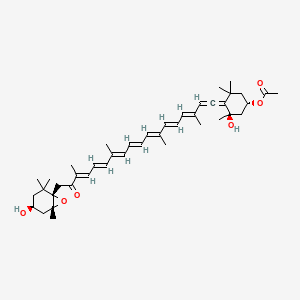 |
Hymenomonas carterae, Isochrysis galbana, Pavlova lutheri, Phaeocystis sp., Prymnesium parvum, Ochromonas sp., Chromulina ochromonoides, Poterioochromonas malhamensis, Synura petersenii, Pelagococcus subviridis, Sarcinochrysis marina Getler, Olisthodiscus luteus, Nitzschia sp., Navicula pelliculosa, Phaeodactylum tricornutum, Skeletonema menzelii, Skeletonema costatum, Thalassiosira oceanica, Thalassiosira pseudonana, Thalassiosira eccentrica, Thalassiosira rotula, Grammatophora oceanica
Ascophyllum nodosum, Fucus serratus, Fucus vesiculosus, Pelvetia canaliculata, Laminaria saccharina
Chattonella japonica, Fibrocapsa japonica, Solorina crocea, Corbicula clams, Corbicula japonica, Corbicula sandai, Limacina helicina
Gelliodes callista, Echinoidea sp.
|
Fucoxanthin is majorly found in **Nitzschia Closterium** and **Phaeodactylum tricornutum** where it acts as a photosynthetic pigment that uses coulomb coupling for energy transfer between carotenoids to chlorophyll A. | Fucoxanthin is well known for its anti-inflammatory, anti-carcinogenic, antioxidant, anti-diabetic, and anti-apoptotic properties. It also possesses chemo-preventive, photoprotective, and anti-proliferative properties. |
1. Fucoxanthin → Fucoxanthin 3-ester (Enzyme: beta-carotene ester transferase) 2. Chlorophyll A + Fucoxanthin → Fucoxanthin pyropheophorbide A ester (Enzyme: beta-carotene ester transferase) |
Fucoxanthin (100%) may cause eye damage or eye irritation. | Fucoxanthin | Fucoxanthin Database |
1. T. Bjoernland, S. Liaaen-Jensen, and J. Throndsen, Phytochemistry, Vol. 28, No. 12, pp. 3347-3353, 1989; Carotenoids of the marine chrysophyte Pelagococcus subviridis. 2. Riccioni, G., D’Orazio, N., Franceschelli, S., & Speranza, L. (2011). Marine Carotenoids and Cardiovascular Risk Markers. Marine Drugs, 9(7), 1166–1175. MDPI AG. 3. S. T. Talcott and L. R. Howard (1999). Phenolic Autoxidation Is Responsible for Color Degradation in Processed Carrot Puree, Journal of Agricultural and food chemistry, 47, 5, 2109–2115. |
Fucoxanthin Reference | Breast cancer Lung cancer Melanoma Leukemia Alzheimers Disease Diabetes COVID-19 Photoaging | breast cancer lung cancer Leukemia neurodegenerative Diabetes COVID-19 |
| 7 | Lutein | C40H56O2 | 568.848 g/mol | "Lutein; Lutein A (3R,3'R,6'R)-beta,epsilon-Carotene-3,3'-diol" | 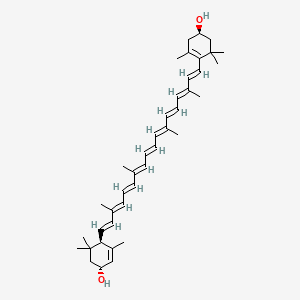 |
Chlamydomonas parkeae, Chlamydomonas reinhardtii, Tetracystis aplanosporum, Tetracystis intermidium, Tetracystis tetrasporum, Tetracystis sp., Ettlia carotinosa, Protosiphon botryoides, Chlorococcum citriforme, Neospongiococcum gelatinosum, Dunaliella salina, Chlorella zofingiensis, Neochloris wimmeri, Muriella aurantiaca, Scotiellopsis oocystiformis, Coelastrum proboscideum, Chlorella fusca, Scenedesmus vacuolatus, Ankistrodesmus spp., Microdictyon boergesenii
Scinaia confusa, Scinaia latifrons, Rhodymenia palmata, Fauchea galapagensis, Rhodymenia californica, Bangia alropurpurea, Porphyra perforata, Porphyra thuretii, Bangia fuscopurpurea, Gigartina stellata, Chondracanthus volans, Iridaea chordata, Mazzaella leptorhynchus, Chondracanthus canaliculatus, Chondracanthus exasperatus, Chondracanthus spinosus, Chondracanthus squarrulosus, Chondracanthus harveyanus, Chondracanthus corymbiferus, Mazzaella affinis, Mazzaella flaccida, Callophyllis pinnata, Mastocarpus papillatus, Eucheuma uncinatum, Grateloupia setchelii, Prionitis lyalii, Halymenia hollenbergii, Prionitis cornea, Plocamium violaceae, Plocamium cartilagineum, Bonnemaisonia hamifera, Antithamnion plumula, Centroceras clavulatum, Ceramium rubrum, Microcladia coulteri, Neoptilota densa, Neoptilota hypnoides, Ptilota filicina, Phycodrys amplissima, Cryptopleura farlowiana, Asterocolax gardner, Acrosorium ciliolatum, Cryptopleura lobulifera, Polyneura latissima, Laurencia gardneri, Polysiphonia pacifica, Polysiphonia hendryi, Pterocladia capillacea, Gelidium johnstonii, Gelidium pusillum, Gelidium coulteri, Gelidium robustum, Pterocladia lucida, Opuntiella californica
Spinacia oleracea L., Arabidopsis thaliana, Capsicum annuum var. lycopersiciforme flavum, Coffea canephora, Coffea arabica, Averrhoa carambola, Malus domestica, Bixa orellana, Aesculus hippocastanum, Boronia megastigma, Citrus reticulata, Calendula officinalis
Protousnea sp., Cladonia sp., Galleria mellonella, Corbicula clams, Corbicula japonica, Corbicula sandai, Fusinus perplexus, Carassius auratus, Salvelinus alpinus, Rana temporaria, Rhacophorus bipunctatus, Gallus gallus, Homo sapiens
|
Lutein is a photosynthetic pigment found in higher plants known to possess photoprotective activity. | Lutein is widely known for antioxidant, anti-carcinogenic, anti-diabetic and anti-aging properties. | "1. Lutein → C14 aldehyde Enzyme: carotenoid 10,11-cleaving dioxygenase 2. Lutein + O2 → (all-E)-3-Hydroxy-retinal Enzyme: carotenoid-15,15'-cleaving oxygenase 3. Lutein + O2 → (all-E,3R)-3-Hydroxy-α-retinal Enzyme: carotenoid-15,15'-cleaving oxygenase " | No toxicity effects were observed for lutein | Lutein | Lutein Database | "1. Harikumar, K. B., Nimita, C. V., Preethi, K. C., Kuttan, R., Shankaranarayana, M. L., & Deshpande, J. (2008). Toxicity profile of lutein and lutein ester isolated from marigold flowers (Tagetes erecta). International journal of toxicology, 27(1), 1–9. 2. Granado, F., Olmedilla, B., & Blanco, I. (2003). Nutritional and clinical relevance of lutein in human health. British journal of Nutrition, 90(3), 487-502. 3. Kijlstra, A., Tian, Y., Kelly, E. R., & Berendschot, T. T. (2012). Lutein: More than just a filter for blue light. Progress in Retinal and Eye Research, 31(4), 303-315. 4. Calvo, M. M. (2005). Lutein: a valuable ingredient of fruit and vegetables. Critical Reviews in Food Science and Nutrition, 45(7-8), 671-696. 5. Schubert, N., García‐Mendoza, E., & Pacheco‐Ruiz, I. (2006). Carotenoid composition of marine red algae 1. Journal of Phycology, 42(6), 1208-1216." | Lutein Reference | Breast cancer lung cancer Cervical cancer Prostate cancer Leukemia non-Hodgkin lymphoma Parkinson's Disease Alzheimers Disease COVID-19 reperfusion Atherosclerosis Photoaging Obesity Nutraceutical | breast cancer lung cancer Cervical cancer Prostate cancer Leukemia non-hodgkin lymphoma neurodegenerative Dengue COVID-19 & reperfusion Atherosclerosis Obesity Nutraceutical |
| 8 | Canthaxanthin | C40H52O2 | 564.816 g/mol | "Canthaxanthin Aphanicin Chlorellaxanthin beta,beta-Carotene-4,4'-dione " | 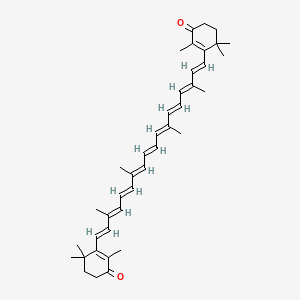 |
Tetracystis intermidium, Ettlia carotinosa, Protosiphon botryoides, Chlorococcum citriforme, Chlorella zofingiensis, Neochloris wimmeri, Scotiellopsis oocystiformis, Chlorella fusca, Scenedesmus vacuolatus, Muriellopsis sp., Botryococcus braunii, Muriella decolor, Euglena gracilis, Pavlova lutheri, Navicula pelliculosa, Skeletonema costatum, Nannochloropsis oculata, Nannochloropsis salina, Nannochloropsis gaditana
Rhizobium lupini, Merismopedia punctata, Calothrix parietina, Microcystis aeruginosa, Aphanizomenon flos-aquae, Anabaena aerulosa oscillatorioides, Anabaena cylindrica, Anabaena flos-aquae, Anabaena variabilis, Anabaena variabilis ATCC 29413, Nostoc commune, Stigonema hormoides, Scytonema crassum, Oscillatoria limosa, Oscillatoria tenuis, Phormidium foveolarum, Phormidium lucidum, Tolypothrix tenuis
Protousnea sp., Solorina crocea, Euchaeta russelli, Corbicula clams, Corbicula japonica, Corbicula sandai, Fusinus perplexus, Paedoclione doliiformis, Gelliodes callista, Plesiocolochirus minutus, Gymnogobius castaneus, Xipholena punicea, Phoenicoparrus andinus, Phoenicoparrus jamesi, Phoenicoparrus ruber, Oriolus cruentus, Oriolus traillii
|
Canthaxanthin is a reddish orange xanthophyll found predominantly in algae, bacteria and fungi. | It is also known for its anti-carcinogenic and anti-oxidant properties. | "1. Canthaxanthin + NADH + H+ + O2 → Phoenicoxanthin + NAD+ + H2O Enzyme: beta-carotene 3-hydroxylase 2. Echinenone → Canthaxanthin Enzyme: beta-carotene 4-ketolase 3. Canthaxanthin → 4-oxo-β-Ionone Enzyme: carotenoid 9,10-oxygenase" | Even at very low concentrations of 1% mol, the formation of crystals have been observed in the macula lutea of the retina. | Canthaxanthin | Canthaxanthin Database | "1. Esatbeyoglu, T., & Rimbach, G. (2017). Canthaxanthin: From molecule to function. Molecular Nutrition & Food Research, 61(6), 1600469. 2. Sujak, A. (2009). Interactions between canthaxanthin and lipid membranes—possible mechanisms of canthaxanthin toxicity. Cellular & molecular biology letters, 14, 395-410. 3. Schlüter, L., Lauridsen, T. L., Krogh, G., & Jørgensen, T. (2006). Identification and quantification of phytoplankton groups in lakes using new pigment ratios–a comparison between pigment analysis by HPLC and microscopy. Freshwater Biology, 51(8), 1474-1485. 4. Tanaka, T., Shnimizu, M., & Moriwaki, H. (2012). Cancer chemoprevention by caroteno. Molecules, 17(3), 3202-3242. 5. Rebelo, B. A., Farrona, S., Ventura, M. R., & Abranches, R. (2020). Canthaxanthin, a red-hot carotenoid: applications, synthesis, and biosynthetic evolution. Plants, 9(8), 1039." | Canthaxanthin Reference | ||
| 9 | Capsanthin | C40H56O3 | 584.848 g/mol | "Capsanthin (3R,3'S,5'R)-3,3'-Dihydroxy-beta,kappa-caroten-6'-one" | 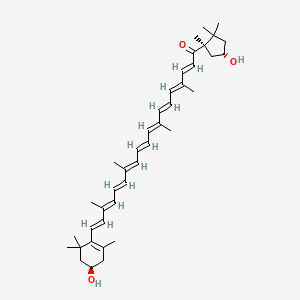 |
Capsicum annuum
Gallus gallus
|
Capsanthin is a red carotenoid possessing strong anti-oxidative effects | It is also known to possess anti-carcinogenic effects | "1. Capsanthin → Capsanthin 5,6-epoxide Enzyme: Carotenoid 5,6-epoxidase 2. Antheraxanthin → Capsanthin Enzyme: capsanthin/capsorubin synthase; antheraxanthin-capsanthin isomerase 3. Capsanthin → Apo-10'-zeaxanthinal" | The toxicity of Capsanthin in rats was observed to be over 11.25 g/kg BW. | Capsanthin | Capsanthin Database | "1. Maeda, H., Nishino, A., & Maoka, T. (2021). Biological activities of paprika carotenoids, capsanthin and capsorubin. Carotenoids: Biosynthetic and biofunctional approaches, 285-293. 2. Shanmugham, V., & Subban, R. (2021). Ninety-day repeated oral toxicity study of saponified Capsicum annum fruit extract with 50% capsanthin in Sprague-Dawley Rats with a 28-day recovery period. Toxicology Reports, 9, 323-336. 3. Kennedy, L. E., Abraham, A., Kulkarni, G., Shettigar, N., Dave, T., & Kulkarni, M. (2021). Capsanthin, a plant-derived xanthophyll: A review of pharmacology and delivery strategies. AAPS pharmscitech, 22(5), 203. 4. Mukai, K. (2019). Antioxidant activity of foods: development of singlet oxygen absorption capacity (SOAC) assay method. Journal of Nutritional Science and Vitaminology, 65(4), 285-302. 5. Bohn, T. (2008). Bioavailability of non-provitamin A carotenoids. Current Nutrition & Food Science, 4(4), 240-258. " | capsanthin Reference | ||
| 10 | Violaxanthin | C40H56O4 | 600.848 g/mol | "Violaxanthin (3S,5R,6S,3'S,5'R,6'S)-5,6:5',6'-Diepoxy-5,6,5',6'-tetrahydro-beta,beta-carotene-3,3'-diol" | 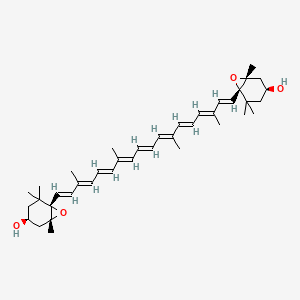 |
Halomicronema hongdechloris, Chlamydomonas parkeae, Chlamydomonas reinhardtii, Tetracystis aplanosporum, Tetracystis intermidium, Tetracystis tetrasporum, Tetracystis sp., Protosiphon botryoides, Chlorococcum citriforme, Neospongiococcum gelatinosum, Chlorella zofingiensis, Muriella aurantiaca, Coelastrum proboscideum, Chlorella fusca, Ankistrodesmus spp., Microdictyon boergesenii, Bathycoccus prasinos, Mantoniella squamata, Nephroselmis olivace, Nephroselmis rotunda, Nephroselmis pyriformis, Prasinococcus capsulatus, Pyramimonas amylifera, Pyramimonas parkeae, Tetraselmis suecica, Tetraselmis tetrathele, Tetraselmis sp., Tetraselmis chui, Tetraselmis marina, Tetraselmis rubens, Tetraselmis subcordiformis
Laurencia gardneri, Polysiphonia pacifica, Bossiella orbignyana, Corallina officinalis, Corallina vancouverensis, Jania tenella, Bossiella californica, Calliarthron tuberculosum, Gracilaria textorii, Gracilaria gracilis, Gracilariopsis lemaneiformis, Smithora naiadum, Cladophora horii, Cladophora kosterae, Aegagrophila linnaei, Chaetomorpha crassa, Cladophora conchopheria, Cladophora albida, Cladophora coelothrix, Cladophora japonica, Cladophora pellucida, Cladophora sericea, Cladophora vagabunda, Cladophora ohkuboana, Cladophora glomerata, Rhizoclonium grande, Pithophora sp., Wittrockiella lyallii, Wittrockiella paradoxa, Cladophoropsis vaucheriaeformis, Cladophoropsis fasciculatus, Cladophoropsis membranacea, Siphonocladus tropicus, Oedogonium cardiacum, Nitella opaca
Chattonella japonica, Lepidodinium chlorophorum
Spinacia oleracea L., Arabidopsis thaliana, Capsicum annuum var. lycopersiciforme flavum, Passiflora edulis, Coffea canephora, Coffea arabica, Diospyros kaki, Malus domestica, Mangifera indica, Citrus reticulata
|
Violaxanthin is a photosynthetic pigment in plants possessing photoprotective activity | It is well known for its anti-carcinogenic activity | "1. Violaxanthin + Ascorbate → Antheraxanthin + Dehydroascorbate + H2O Enzyme: Violaxanthin de-epoxidase; violaxanthin:ascorbate oxidoreductase 2. Zeaxanthin + 4 Reduced ferredoxin + 4 H+ + 2 Oxygen → Violaxanthin + 4 Oxidized ferredoxin + 2 H2O Enzyme: zeaxanthin,NADH:oxygen oxidoreductase 3. Violaxanthin → 9-cis-Violaxanthin Enzyme: violaxanthin-9-cis-violaxanthin isomerase " | The toxicity of violaxanthin was observed to be 250 uM in RAW 264.7 cells | Violaxanthin/a> | Violaxanthin Database | "1. Soontornchaiboon, W., Joo, S. S., & Kim, S. M. (2012). Anti-inflammatory effects of violaxanthin isolated from microalga Chlorella ellipsoidea in RAW 264.7 macrophages. Biological and Pharmaceutical Bulletin, 35(7), 1137-1144. 2. Takemura, M., Sahara, T., & Misawa, N. (2021). Violaxanthin: natural function and occurrence, biosynthesis, and heterologous production. Applied Microbiology and Biotechnology, 105(16), 6133-6142. 3. Havaux, M., & Niyogi, K. K. (1999). The violaxanthin cycle protects plants from photooxidative damage by more than one mechanism. Proceedings of the National Academy of Sciences, 96(15), 8762-8767. 4. Egeland, E. S., Eikrem, W., Throndsen, J., Wilhelm, C., Zapata, M., & Liaaen-Jensen, S. (1995). Carotenoids from further prasinophytes. Biochemical systematics and ecology, 23(7-8), 747-755. 5. Taylor, K. L., Brackenridge, A. E., Vivier, M. A., & Oberholster, A. (2006). High-performance liquid chromatography profiling of the major carotenoids in Arabidopsis thaliana leaf tissue. Journal of Chromatography A, 1121(1), 83-91. " | ViolaxanthinReference | ||
| 11 | Rubixanthin | C40H56O | 552.9 g/mol | "Rubixanthin Natural yellow 27 (3R)-beta,psi-caroten-3-ol (3R)-beta-4-Caroten-3-ol g-Caroten-3-ol b,y-Caroten-3-ol 3-Hydroxy-g-carotene beta-4-Caroten-3-ol, (3R)- (all-E,3R)-rubixanthin (3R)-RUBIXANTHIN ALL-TRANS-RUBIXANTHIN (1R)-4-[(1E,3E,5E,7E,9E,11E,13E,15E,17E,19E)-3,7,12,16,20,24-hexamethylpentacosa-1,3,5,7,9,11,13,15,17,19,23-undecaenyl]-3,5,5-trimethylcyclohex-3-en-1-ol 3',4'-DIHYDROCELAXANTHIN 3-CYCLOHEXEN-1-OL, 4-((1E,3E,5E,7E,9E,11E,13E,15E,17E,19E)-3,7,12,16,20,24-HEXAMETHYL-1,3,5,7,9,11,13,15,17,19,23-PENTACOSAUNDECAEN-1-YL)-3,5,5-TRIMETHYL-, (1R)- (1R)-4-((1E,3E,5E,7E,9E,11E,13E,15E,17E,19E)-3,7,12,16,20,24-hexamethylpentacosa-1,3,5,7,9,11,13,15,17,19,23-undecaenyl)-3,5,5-trimethylcyclohex-3-en-1-ol BETA,OMEGA-CAROTEN-3-OL, (3R)-" | 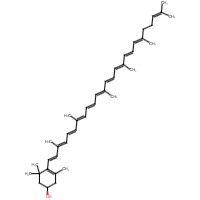 |
"Erythrobacter longus Carica papaya Helvella esculenta Helvella monoachella " | Not available | It was formerly used as a food colourant. It is known to improve eye health and is also known for its anti-inflammatory and anti-oxidant potentials. | Not available | Not available | Rubixanthin | Rubixanthin Database | "1. Hornero-Méndez, D., & Mínguez-Mosquera, M. I. (2000). Carotenoid pigments in Rosa mosqueta hips, an alternative carotenoid source for foods. Journal of Agricultural and Food Chemistry, 48(3), 825-828. 2. Ayati, Z., Amiri, M. S., Ramezani, M., Delshad, E., Sahebkar, A., & Emami, S. A. (2018). Phytochemistry, traditional uses and pharmacological profile of rose hip: A review. Current pharmaceutical design, 24(35), 4101-4124. 3. Gerard P. Moss, Herbert Baxter, J.B. Harborne, Gerald P. Moss, CRC Press; 1 edition (February 15, 1993), ISBN-10: 0850667364, ISBN-13: 978-0850667363, ""Phytochemical Dictionary: A Handbook of Bioactive Compounds from Plants"". " | Rubixanthin Reference | Cold, Hypertension, flu, high blood pressure | Cold, Hypertension, flu, high blood pressure |
| 12 | Rhodoxanthin | C40H50O2 | 562.8 g/mol | "Rhodoxanthin (4E)-3,5,5-trimethyl-4-[(2E,4E,6E,8E,10E,12E,14E,16E,18E)-3,7,12,16-tetramethyl-18-(2,6,6-trimethyl-4-oxocyclohex-2-en-1-ylidene)octadeca-2,4,6,8,10,12,14,16-octaenylidene]cyclohex-2-en-1-one 4,7'-RETRO-.BETA.,.EPSILON.-CAROTENE-3,3'-DION 4,5'-retro-beta,beta-Carotene-3,3'-dione, 4',5'-didehydro- 4,5'-Retro-.beta.,.beta.-Carotene-3,3'-dione, 4',5'-didehydro- Retro-.beta.-Carotene-3,3'-dione, 4',5'-didehydro-, all-trans- (4E)-3,5,5-trimethyl-4-((2E,4E,6E,8E,10E,12E,14E,16E,18E)-3,7,12,16-tetramethyl-18-(2,6,6-trimethyl-4-oxocyclohex-2-en-1-ylidene)octadeca-2,4,6,8,10,12,14,16-octaenylidene)cyclohex-2-en-1-one 4,7'-RETRO-BETA,EPSILON-CAROTENE-3,3'-DION 4',5'-Didehydro-4,5'-retro-beta,beta-carotene-3,3'-dione Retro-beta-Carotene-3,3'-dione, 4',5'-didehydro-, all-trans- " | 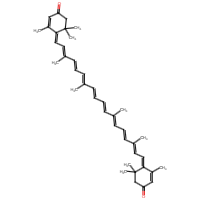 |
"Epicoccum nigrum Protousnea sp. Cladonia sp. Ilicura militaris" | It is a photosynthetic pigment and is widely known for its photoprotective activity | Rhodoxanthin is known for its anti-tumour and anti-oxidant potentials. It is also known for its role as a colourant in various industries. | Not available | No toxic effects were observed | Rhodoxanthin | Rhodoxanthin Database | "1. HAN, Q., SHINOHARA, K., KAKUBARI, Y., & MUKAI, Y. (2003). Photoprotective role of rhodoxanthin during cold acclimation in Cryptomeria japonica. Plant, Cell & Environment, 26(5), 715-723. 2. Dumitraş, D., Dreanca, A. I., Pall, E., Gal, A. F., Rus, V., Morohoschi, A. G., Cotul, M., Nan, M. I., & Andrei, S. (2022). Inhibition of Tumor Growth and Modulation of Antioxidant Activity of Rhodoxanthin Isolated from Taxus baccata Aril against B16F10 Murine Malignant Melanoma. Antioxidants, 11(11), 2264. 3. Mussagy, C. U., Giuffrida, D., Meléndez-Martínez, A. J., & Dufossé, L. (2023). Rhodoxanthin: The new hit of the natural carotenoids market? Trends in Food Science & Technology, 136, 135-144. 4. Dumitraş, D. A., Bunea, A., Vodnar, D. C., Hanganu, D., Pall, E., Cenariu, M., ... & Andrei, S. (2022). Phytochemical characterization of Taxus baccata L. Aril with emphasis on evaluation of the antiproliferative and pro-apoptotic activity of Rhodoxanthin. Antioxidants, 11(6), 1039." | Rhodoxanthin Reference | Melanoma | Melanoma |
| 13 | Phytofluene | C40H62 | 542.9 g/mol | "Phytofluene all-trans-phytofluene (6E,10E,12E,14E,16E,18E,22E,26E)-2,6,10,14,19,23,27,31-octamethyldotriaconta-2,6,10,12,14,16,18,22,26,30-decaene 7,7',8,8',11,12-hexahydro-psi,psi-carotene 7,8,11,12,7',8'-hexahydro-psi,psi-carotene (12E,16E,18E,22E,26E)-2,6,10,14,19,23,27,31-octamethyldotriaconta-2,6,10,12,14,16,18,22,26,30-decaene all-trans phytofluene ALL-(E)-PHYTOFLUENE 7,7',8,8',11,12-HEXAHYDROLYCOPENE psi,psi-Carotene, 7,7',8,8',11,12-hexahydro- LYCOPENE, 7,7',8,8',11,12-HEXAHYDRO-, ALL-TRANS- y,y-Carotene, 7,7',8,8',11,12-hexahydro-, cis-(9CI)" |  |
"Halobacterium cutirubrum Rhodobacter capsulatus Coccinella septempunctata " | It is a colourless carotenoid known to play vital roles in the synthesis of other carotenoids. | Phytofluene is known for its ability to absorb UV radiation and is known for its role in the cosmetics industry. It is also a potent anti-oxidant. | "1. (all-E)-Phytofluene → ζ-Carotene Enzyme: phytoene desaturase 2. Phytoene → (all-E)-Phytofluene Enzyme: phytoene desaturase " | A daily intake of 2.70 mg has been proposed for phytofluene | Phytofluene | Phytofluene Database | "1. Engelmann, N. J., & Clinton, S. K. (2011). Nutritional Aspects of Phytoene and Phytofluene, Carotenoid Precursors to Lycopene. Advances in Nutrition, 2(1), 51. 2. von Oppen-Bezalel, L., & Shaish, A. (2019). Application of the colorless carotenoids, phytoene, and phytofluene in cosmetics, wellness, nutrition, and therapeutics. In The Alga Dunaliella (pp. 423-444). CRC Press. 3. J., A., & Stinco, C. M. (2019). Skin Carotenoids in Public Health and Nutricosmetics: The Emerging Roles and Applications of the UV Radiation-Absorbing Colourless Carotenoids Phytoene and Phytofluene. Nutrients, 11(5), 1093. 4. Ashikhmin, A. A., Benditkis, A. S., Moskalenko, A. A., & Krasnovsky, A. A. (2020). Phytofluene as a highly efficient UVA photosensitizer of singlet oxygen generation. Biochemistry (Moscow), 85, 773-780." | Phytofluene Reference | Not available | Not available |
| 14 | Phytoene | C40H64 | 544.9 g/mol | "Phytoene All-trans-Phytoene trans-Phytoene (all-E)-Phytoene (6E,10E,14E,16E,18E,22E,26E)-2,6,10,14,19,23,27,31-octamethyldotriaconta-2,6,10,14,16,18,22,26,30-nonaene 7,7,8,8,11,11,12,12-octahydro-psi,psi-carotene 7,7',8,8',11,11',12,12'-Octahydro-psi,psi-carotene 2,6,10,14,19,23,27,31-octamethyldotriaconta-2,6,10,14,16,18,22,26,30-nonaene (E/Z)-Phytoene all-trans-7,7',8,8',11,11',12,12'-octahydro-Lycopene 7,7',8,8',11,11',12,12'-octahydro-psi,psi-caro 7,8,11,12,7',8',11',12'-octahydro-psi,psi-carotene 7,7',8,8',11,11',12,12'-Octahydro-psi,psi-carotene # psi,psi-Carotene, 7,7',8,8',11,11',12,12'-octahydro- Lycopene, 7,7',8,8',11,11',12,12'-octahydro-, all-trans- 2,6,10,14,16,18,22,26,30-DOTRIACONTANONAENE, 2,6,10,14,19,23,27,31-OCTAMETHYL- LYCOPENE, 7,7',8,8',11,11',12,12'-OCTAHYDRO-, ALL-TRANS-" |  |
"Halobacterium cutirubrum Thermus thermophilus Rhodobacter capsulatus Scenedesmus acutus Solanum lycopersicum Citrus sinensis L. Osbeck Rhodotorula minuta Homo sapiens" | Phytoene is vital for the synthesis of other carotenoids. | Phytoene is known for its anti-carcinogenic activity | "1. Phytoene → (9Z,9'Z)-ζ-Carotene 2. Phytoene → Lycopene Enzyme: phytoene desaturase 3. Lycopersene → Phytoene" | A daily intake of 2.70 mg has been proposed for phytoene | Phytoene | Phytoene Database | "1. J., A., & Stinco, C. M. (2019). Skin Carotenoids in Public Health and Nutricosmetics: The Emerging Roles and Applications of the UV Radiation-Absorbing Colourless Carotenoids Phytoene and Phytofluene. Nutrients, 11(5), 1093. 2. Chen, Y., Zhou, B., Li, J., Tang, H., Tang, J., & Yang, Z. (2018). Formation and Change of Chloroplast-Located Plant Metabolites in Response to Light Conditions. International Journal of Molecular Sciences, 19(3), 654. 3. Wang, Z., Zhang, L., Dong, C., Guo, J., Jin, L., Wei, P., ... & Wang, R. (2021). Characterization and functional analysis of phytoene synthase gene family in tobacco. BMC Plant Biology, 21, 1-18. 4. Mantzouridou, F. T., Sferopoulou, E., & Thanou, P. (2024). Uncovering the Hidden Potential of Phytoene Production by the Fungus Blakeslea trispora. Foods, 13(18), 2882." | Phytoene Reference | Not available | Not available |
| 15 | Flavoxanthin | C40H56O3 | 584.9 g/mol | "Flavoxanthin CHRYSTEMAXANTHIN ALL-TRANS-FLAVOXANTHIN (2R,6S,7aR)-2-[(2E,4E,6E,8E,10E,12E,14E,16E)-17-[(1R,4R)-4-hydroxy-2,6,6-trimethylcyclohex-2-en-1-yl]-6,11,15-trimethylheptadeca-2,4,6,8,10,12,14,16-octaen-2-yl]-4,4,7a-trimethyl-2,5,6,7-tetrahydro-1-benzofuran-6-ol (3S,3'R,5R,6'R,8R)-5,8-Epoxy-5,8-dihydro-beta,epsilon-carotene-3,3'-diol .GAMMA.-CAROTENE-3,3'-DIOL, 5,8-EPOXY-5,8-DIHYDRO- (3S,3'R,5R,6'R,8R)-5,8-EPOXY-5,8-DIHYDRO-.BETA.,.EPSILON.-CAROTENE-3,3'-DIOL .beta.,.epsilon.-Carotene-3,3'-diol, 5,8-epoxy-5,8-dihydro-, (3S,3'R,5R,6'R,8R)- beta,epsilon-Carotene-3,3'-diol, 5,8-epoxy-5,8-dihydro-, (3S,3'R,5R,6'R,8R)- (2R,6S,7aR)-2-((2E,4E,6E,8E,10E,12E,14E,16E)-17-((1R,4R)-4-hydroxy-2,6,6-trimethylcyclohex-2-en-1-yl)-6,11,15-trimethylheptadeca-2,4,6,8,10,12,14,16-octaen-2-yl)-4,4,7a-trimethyl-2,5,6,7-tetrahydro-1-benzofuran-6-ol gamma-Carotene-3,3'-diol, 5,8-epoxy-5,8-dihydro- (3S,5R,8RS,3'R,6'R)-5,8-Epoxy-5,8-dihydro-beta,epsilon-carotene-3,3'-diol" | 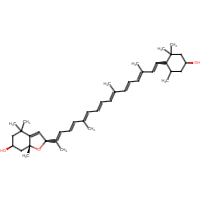 |
"Helvella esculenta Helvella pezizoides Equilabium molle Taraxacum mongolicum Pseudoalteromonas luteoviolacea" | It is widely found in the petals of calendula. | It is used as an emulsifier and surfactant | Not available | Not available | Flavoxanthin | Flavoxanthin Database | "1. Anne-Laure Gagez, Valérie Thiery, Virginie Pasquet, Jean-Paul Cadoret, and Laurent Picot, Current Bioactive Compounds 2012, 8, 000-000, ""Epoxycarotenoids and Cancer. Review"". 2. Antonio, M., Eugenia, A., & Daniel, J. (2022). Chemistry, Occurrence, Properties, Applications, and Encapsulation of Carotenoids—A Review. Plants, 12(2), 313. 3. Mehmood, A., & Zeb, A. (2023). Effects of different processing conditions on the carotenoid's composition, phenolic contents, and antioxidant activities of Brassica campestris leaves. Heliyon, 9(11), e21191." | Flavoxanthin Reference | Not available | Not available |
| 16 | Diatoxanthin | C40H54O2 | 566.9 g/mol | "Diatoxanthin all-trans-Diatoxanthin Diatoxanthin/ 7,8-Didehydrozeaxanthin (1R)-4-[(1E,3E,5E,7E,9E,11E,13E,15E)-18-[(4R)-4-hydroxy-2,6,6-trimethylcyclohexen-1-yl]-3,7,12,16-tetramethyloctadeca-1,3,5,7,9,11,13,15-octaen-17-ynyl]-3,5,5-trimethylcyclohex-3-en-1-ol (1~{R})-3,5,5-trimethyl-4-[(1~{E},3~{E},5~{E},7~{E},9~{E},11~{E},13~{E},15~{E})-3,7,12,16-tetramethyl-18-[(4~{R})-2,6,6-trimethyl-4-oxidanyl-cyclohexen-1-yl]octadeca-1,3,5,7,9,11,13,15-octaen-17-ynyl]cyclohex-3-en-1-ol 7,8-Didehydro-beta,beta-carotene-3R,3'R-diol beta,beta-Carotene-3,3'-diol, 7,8-didehydro-, (3R,3'R)-" | 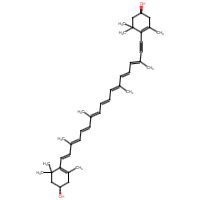 |
"Euglena gracilis Euglena sanguinea Euglena viridis Eutreptiella gymnastica Hymenomonas carterae Isochrysis galbana Pavlova lutheri Phaeocystis sp. Prymnesium parvum Pelagococcus subviridis Sarcinochrysis marina Getler Nitzschia sp. Navicula pelliculosa Phaeodactylum tricornutum Skeletonema menzelii Skeletonema costatum Thalassiosira oceanica Thalassiosira pseudonana Thalassiosira eccentrica Thalassiosira rotula Grammatophora oceanica Gymnodinum nelsoni Amphidinium carterae Tovellia sanguinea Peridinium bipes Corbicula clams Corbicula japonica Corbicula sandai Fusinus perplexus Clione limacina Paedoclione doliiformis Limacina helicina Gymnogobius castaneus Carassius auratus" | Diatoxanthin is known for its photoprotective properties. | Diatoxanthin is also known for its anti-cancer properties. | "1. Diatoxanthin → Alloxanthin 2. Diatoxanthin → Diadinoxanthin Enzyme: Diatoxanthin epoxidase 3. Diadinoxanthin → Diatoxanthin Enzyme: Diadinoxanthin deepoxidase" | No toxic effects were observed | Diatoxanthin |
PubChem KEGG Compound |
1. Maoka, T., Tsushima, M., & Nishino, H. (2002). Isolation and characterization of dinochrome A and B, anti-carcinogenic active carotenoids from the fresh water red tide *Peridinium bipes*. *Chemical and Pharmaceutical Bulletin*, 50(12), 1630-1633. 2. Goss, R., Pinto, E. A., Wilhelm, C., & Richter, M. (2006). The importance of a highly active and ΔpH-regulated diatoxanthin epoxidase for the regulation of the PS II antenna function in diadinoxanthin cycle containing algae. *Journal of Plant Physiology*, 163(10), 1008–1021. 3. Pistelli, L., Sansone, C., Smerilli, A., Festa, M., Noonan, D. M., Albini, A., & Brunet, C. (2021). MMP-9 and IL-1β as targets for Diatoxanthin and related microalgal pigments: potential chemopreventive and photoprotective agents. *Marine Drugs*, 19(7), 354. |
Reference 1 Reference 2 Reference 3 |
Prostate cancer | Prostate cancer |
| 17 | ε-Carotene | C40H56 | 536.9 g/mol |
epsilon-Carotene epsilon,epsilon-Carotene 1,5,5-trimethyl-6-[(1E,3E,5E,7E,9E,11E,13E,15E,17E)-3,7,12,16-tetramethyl-18-(2,6,6-trimethylcyclohex-2-en-1-yl)octadeca-1,3,5,7,9,11,13,15,17-nonaenyl]cyclohexene .EPSILON.-CAROTENE |
 |
Prochlorococcus marinus strain CCMP 1375 Prochlorococcus marinus strain CCMP 2773 Prasinococcus capsulatus Cryptomonas ovata Phoenicoparrus andinus |
It is involved in the production of beta-cryptoxanthin and lycopene | Not available |
1. ε-Carotene → α-Ionone 2. δ-Carotene → ε-Carotene Enzyme: carotenoid psi-end group lyase |
Not available | ε-carotene Patent | PubChem: 446439 KEGG Compound: C16276 |
1. Pennington, F. C., Haxo, F. T., Borch, G., & Liaaen-Jensen, S. (1985). Carotenoids of cryptophyceae. Biochemical Systematics and Ecology, 13(3), 215–219. 2. Ronen, G., Cohen, M., Zamir, D., & Hirschberg, J. (1999). Regulation of carotenoid biosynthesis during tomato fruit development. The Plant Journal, 17(4), 341–351. 3. Wang, H. et al. (2023). Lycopene ε-cyclase mediated transition of α-carotene and β-carotene metabolic flow in carrot fleshy root. The Plant Journal, 115(4), 986–1003. |
Reference 1 Reference 2 Reference 3 Commercial Source |
Not available | Not available |
| 18 | δ-Carotene | C40H56 | 536.9 g/mol |
delta-Carotene epsilon,psi-Carotene, (6R)- delta-Carotene, (+)- (6R)-delta-Carotene delta-Carotene, (R)-all-trans-(+)- (6R)-6-[(1E,3E,5E,7E,9E,11E,13E,15E,17E,19E)-3,7,12,16,20,24-hexamethylpentacosa-1,3,5,7,9,11,13,15,17,19,23-undecaenyl]-1,5,5-trimethylcyclohexene e,y-Carotene (All-E)-6R-(3,7,12,16,20,24-hexamethyl-1,3,5,7,9,11,13,15,17,19,23-pentacosaundecaenyl)-1,5,5-trimethylcyclohexene (6R)-epsilon,psi-Carotene 3,7,12,16,20,24-HEXAMETHYL-1-[(1R)-2,6,6-TRIMETHYL-1-CYCLOHEX-2-ENYL]PENTACOSA-1,3,5,7,9,11,13,15,17,19,23-UNDECAENE |
 |
Lycopersicon esculentum Mill. x Lycopersicon hirsutum Humb. x Bonpl. | It is vital for the synthesis of alpha-carotene | It is widely used as a food colourant. It is also known to show inhibitory effects against SARS viruses. |
1. δ-Carotene → α-Ionone Enzyme: carotenoid 9,10-oxygenase 2. δ-Carotene → α-Carotene Enzyme: carotenoid beta-end group lyase 3. Lycopene → δ-Carotene Enzyme: carotenoid psi-end group lyase |
No toxic effects were observed | δ-Carotene Patent | PubChem: 5281230 KEGG Compound: C08586 |
1. Baxter, H., Puri, B., Harborne, J. B., Hall, A., & Moss, G. P. (1998). Phytochemical dictionary: a handbook of bioactive compounds from plants. CRC press. 2. Ahmad, P., Alvi, S. S., Hasan, I., & Khan, M. S. (2024). Targeting SARS-CoV-2 main protease (Mpro) and human ACE-2: A virtual screening of carotenoids and polyphenols from tomato (Solanum lycopersicum L.) to combat Covid-19. Intelligent Pharmacy, 2(1), 51–68. 3. Tomes, M. L. (1969). Delta-carotene in the tomato. Genetics, 62(4), 769. |
Reference 1 Reference 2 Reference 3 |
SARS-CoV-2 | SARS-CoV-2 |
| 19 | γ-Carotene | C40H56 | 536.9 g/mol |
GAMMA-CAROTENE beta,psi-Carotene gamma-Carotene, all-trans- gamma-Carotin all-trans-gamma-Carotene 2-[(1E,3E,5E,7E,9E,11E,13E,15E,17E,19E)-3,7,12,16,20,24-hexamethylpentacosa-1,3,5,7,9,11,13,15,17,19,23-undecaenyl]-1,3,3-trimethylcyclohexene (ALL-E)-2-(3,7,12,16,20,24-hexamethyl-1,3,5,7,9,11,13,15,17,19,23-pentacosaundecaenyl)-1,3,3-trimethylcyclohexene |
 |
Chlorobium tepidum Sorangium compositum Rhodobacter sphaeroides Oscillatoria princeps Chara tomentosa Chara contraria Chara hispida Chara rudis Chara globularis Chara polyacantha Chara aspera Nitella opaca Nephroselmis rotunda Euglena rubida mainx Euglena gracilis Passiflora edulis Citrullus vulgaris Calendula officinalis Elaeis spp. Rhodotorula minuta Macrosiphum liriodendri Coccinella septempunctata |
Gamma-carotene is vital for the synthesis of retinol | It is widely known for its anti-oxidant properties. It is also used as a yellow colourant. |
1. γ-Carotene → Deinoxanthin Enzyme: carotenoid ketolase 2. γ-Carotene → β-Carotene Enzyme: carotenoid beta-end group lyase 3. Lycopene → γ-Carotene Enzyme: carotenoid beta-end group lyase |
It is known to be non-toxic | γ-Carotene Patent | PubChem: 5280791 KEGG Compound: C05435 |
1. Goodwin, T. W. (1954). Studies in carotenogenesis. The carotenoids of the flower petals of Calendula officinalis. Biochemical Journal, 58(1), 90. 2. Baxter, H., Puri, B., Harborne, J. B., Hall, A., & Moss, G. P. (1998). Phytochemical dictionary: a handbook of bioactive compounds from plants. CRC press. 3. Maoka, T. (2019). Carotenoids as natural functional pigments. Journal of Natural Medicines, 74(1), 1. 4. Gateau, H., Solymosi, K., Marchand, J., & Schoefs, B. (2017). Carotenoids of microalgae used in food industry and medicine. Mini reviews in medicinal chemistry, 17(13), 1140–1172. |
Reference 1 Reference 2 Reference 3 Reference 4 Reference 5 |
SARS-CoV-2 | SARS-CoV-2 |
| 20 | ζ-Carotene | C40H60 | 540.9 g/mol |
zeta-Carotene all-trans-zeta-carotene (6E,10E,12E,14E,16E,18E,20E,22E,26E)-2,6,10,14,19,23,27,31-octamethyldotriaconta-2,6,10,12,14,16,18,20,22,26,30-undecaene xi-Carotene Zeta-Carotin Carotene, zeta 7,8,7',8'-tetrahydro-psi,psi-carotene (9-cis,9'-cis)-7,7',8,8'-Tetrahydro-y,y-Carotene 7,7',8,8'-Tetrahydrolycopene 7,7',8,8'-Tetrahydro-psi,psi-carotene 2,6,10,14,19,23,27,31-octamethyldotriaconta-2,6,10,12,14,16,18,20,22,26,30-undecaene |
 |
Staphylococcus aureus Oscillantoria rubescens Passiflora edulis Ipomoea batatas Lam. Averrhoa carambola Carica papaya Citrullus vulgaris Calendula officinalis |
It is vital for the synthesis of lycopene | Zeta-carotene has the potential to restrict aging and the inflammation in the skin. It is also used as a yellow colourant. |
1. ζ-Carotene → Lycopene Enzyme: Phytoene desaturase 2. ζ-Carotene → Geranylacetone 3. (9Z,9'Z)-ζ-Carotene → ζ-Carotene |
Not available | ζ-Carotene Patent | PubChem: 5280788 KEGG Compound: C05430 |
1. Baxter, H., Puri, B., Harborne, J. B., Hall, A., & Moss, G. P. (1998). Phytochemical dictionary: a handbook of bioactive compounds from plants. CRC press. 2. Pecker, I., Chamovitz, D., Linden, H., Sandmann, G., & Hirschberg, J. (1992). A single polypeptide catalyzing the conversion of phytoene to zeta-carotene is transcriptionally regulated during tomato fruit ripening. Proceedings of the National Academy of Sciences, 89(11), 4962–4966. 3. Zhang, L., Wang, K., Liang, S., Cao, J., Yao, M., Qin, L., ... & Miao, J. (2023). Beneficial effect of ζ-carotene-like compounds on acute UVB irradiation by alleviating inflammation and regulating intestinal flora. Food & Function, 14(18), 8331–8350. |
Reference 1 Reference 2 Reference 3 |
photoaging | photoaging |
| 21 | Neurosporene | C₄₀H₅₈ | 538.9 g/mol | Neurosporene all-trans-Neurosporene 7,8-dihydro-psi,psi-carotene Neurosporin (6E,8E,10E,12E,14E,16E,18E,20E,22E,26E)-2,6,10,14,19,23,27,31-octamethyldotriaconta-2,6,8,10,12,14,16,18,20,22,26,30-dodecaene all-trans neurosporene psi,psi-Carotene, 7,8-dihydro- 7,9,9'-cis-neurosporene 7,8-Dihydro-y,y-carotene Lycopene, 7,8-dihydro-, all-trans- 2,6,8,10,12,14,16,18,20,22,26,30-Dotriacontadodecaene, 2,6,10,14,19,23,27,31-octamethyl- |
 |
Rubrivivax gelatinosus Sorangium compositum Rhodopseudomonas globiformis Rhodobacter viridis JA737 Rhodobaca bogoriensis Passiflora edulis Ipomoea batatas Lam. |
Acts as precursor for the synthesis of various coloured carotenoids | It is a potential antioxidant and is also known for its UV-protection abilities | 1. Neurosporene → Chloroxanthin Enzyme: lycopene hydro-lyase 2. Neurosporene → α-Zeacarotene Enzyme: carotenoid psi-end group lyase 3. Phytoene → Neurosporene Enzyme: 15-cis-phytoene:acceptor oxidoreductase |
Not available | Link | PubChem: 5280789 KEGG Compound: C05431 |
1. Scolnik, P. A., Walker, M. A., & Marrs, B. L. (1980). Biosynthesis of carotenoids derived from neurosporene in Rhodopseudomonas capsulata. Journal of Biological Chemistry, 255(6), 2427-2432. 2. Ramaprasad, E. V. V., Sasikala, C., & Ramana, C. V. (2013). Neurosporene is the major carotenoid accumulated by Rhodobacter viridis JA737. Biotechnology Letters, 35, 1093–1097. 3. Martin, C., Baronian, G., & Nachat-Kappes, R. (2024). U.S. Patent Application No. 17/773,058. |
1. Reference Link 2. Reference Link 3. Reference Link |
Not available | Not available |
| 22 | Antheraxanthin | C₄₀H₅₆O₃ | 584.9 g/mol | Antheraxanthin Antheraxanthin A trans-Antheraxanthin all-trans-antheraxanthin (1R,3S,6S)-6-[(1E,3E,5E,7E,9E,11E,13E,15E,17E)-18-[(4R)-4-hydroxy-2,6,6-trimethylcyclohexen-1-yl]-3,7,12,16-tetramethyloctadeca-1,3,5,7,9,11,13,15,17-nonaenyl]-1,5,5-trimethyl-7-oxabicyclo[4.1.0]heptan-3-ol ALL-TRANS-ANTHERAXANTHIN A .beta.-Carotene-3,3'-diol, 5,6-epoxy-5,6-dihydro-, all-trans- 5,6-epoxy-5,6-dihydro-beta,beta-carotene-3,3'-diol .BETA.-CAROTENE-3,3'-DIOL, 5,6-EPOXY-5,6-DIHYDRO- 5,6-EPOXY-5,6-DIHYDRO-.BETA.,.BETA.-CAROTENE-3,3'-DIOL (3R,3'S,5'R,6'S)-5',6'-dihydro-5',6'-epoxy-beta,beta-carotene-3,3'-diol .BETA.,.BETA.-CAROTENE-3,3'-DIOL, 5,6-EPOXY-5,6-DIHYDRO-, (3S,3'R,5R,6S)- (1R,3S,6S)-6-((1E,3E,5E,7E,9E,11E,13E,15E,17E)-18-((4R)-4-HYDROXY-2,6,6-TRIMETHYLCYCLOHEXEN-1-YL)-3,7,12,16-TETRAMETHYLOCTADECA-1,3,5,7,9,11,13,15,17-NONAENYL)-1,5,5-TRIMETHYL-7-OXABICYCLO(4.1.0)HEPTAN-3-OL (1R,3S,6S)-6-((1E,3E,5E,7E,9E,11E,13E,15E,17E)-18-((R)-4-HYDROXY-2,6,6-TRIMETHYLCYCLOHEX-1-EN-1-YL)-3,7,12,16-TETRAMETHYLOCTADECA-1,3,5,7,9,11,13,15,17-NONAEN-1-YL)-1,5,5-TRIMETHYL-7-OXABICYCLO(4.1.0)HEPTAN-3-OL beta,beta-Carotene-3,3'-diol, 5,6-epoxy-5,6-dihydro- BETA-CAROTENE-3,3'-DIOL, 5,6-EPOXY-5,6-DIHYDRO- beta,beta-Carotene-3,3'-diol, 5,6-epoxy-5,6-dihydro- (VAN) beta,beta-Carotene-3,3'-diol, 5,6-epoxy-5,6-dihydro-(VAN) BETA-CAROTENE-3,3'-DIOL, 5,6-EPOXY-5,6-DIHYDRO-, ALL-TRANS- (3R,3'S,5'R,6'S)-5',6' -DIHYDRO-5',6'-EPOXY-.BETA.,.BETA.-CAROTENE-3,3'-DIOL (3R,3'S,5'R,6'S)-5',6'-DIHYDRO-5',6'-EPOXY-.BETA.,.BETA.-CAROTENE-3,3'-DIOL BETA,BETA-CAROTENE-3,3'-DIOL, 5,6-EPOXY-5,6-DIHYDRO-, (3S,3'R,5R,6S)- |
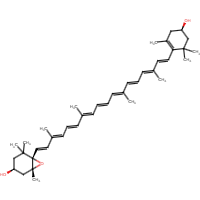 |
Halomicronema hongdechloris Antithamnion plumula Ceramium rubrum Laurencia gardneri Osmundea spectabilis Polysiphonia pacifica Polysiphonia hendryi Bossiella orbignyana Corallina officinalis Corallina vancouverensis Jania tenella Bossiella californica Calliarthron tuberculosum Gracilaria textorii Gracilaria gracilis Gracilariopsis lemaneiformis Smithora naiadum Protosiphon botryoides Ankistrodesmus spp. Microdictyon boergesenii Basicladia sp. Chaetomorpha okamurae Cladophora horii Cladophora kosterae Aegagrophila linnaei Chaetomorpha crassa Cladophora conchopheria Cladophora albida Cladophora coelothrix Cladophora japonica Cladophora pellucida Cladophora sericea Cladophora vagabunda Cladophora ohkuboana Cladophora glomerata Rhizoclonium grande Pithophora sp. Wittrockiella lyallii Wittrockiella paradoxa Cladophoropsis vaucheriaeformis Cladophoropsis fasciculatus Cladophoropsis membranacea Siphonocladus tropicus Pleurastrum paucicellulare Tetraselmis suecica Tetraselmis tetrathele Tetraselmis chui Tetraselmis marina Tetraselmis rubens Tetraselmis subcordiformis Oedogonium cardiacum Chara gymnophylla Chara tomentosa Chara contraria Chara hispida Chara rudis Chara globularis Chara intermedia Chara polyacantha Chara aspera Chara foetida Chara vulgaris Nitella opaca Mantoniella squamata Nephroselmis olivace Prasinococcus capsulatus Pyramimonas amylifera Pyramimonas parkeae Euglena rubida mainx Euglena gracilis var. bacillarus Euglena gracilis Olisthodiscus luteus Nannochlor... |
Intermediate in the xanthophyll cycle; regulates light-harvesting in photosynthesis | Antioxidant properties; helps protect chloroplast membranes from photooxidative damage | 1. Violaxanthin → Antheraxanthin Enzyme: Violaxanthin de-epoxidase 2. Antheraxanthin → Zeaxanthin Enzyme: Antheraxanthin de-epoxidase |
Not available | Link | PubChem: 5281223 KEGG Compound: C08579 |
1. Demmig-Adams, B., & Adams, W. W. (1996). The role of xanthophyll cycle carotenoids in the protection of photosynthesis. *Trends in Plant Science*, 1(1), 21–26. 2. Jahns, P., & Holzwarth, A. R. (2012). The role of the xanthophyll cycle and lutein in photoprotection of photosystem II. *Biochimica et Biophysica Acta (BBA) - Bioenergetics*, 1817(1), 182–193. |
1. Reference Link 2. Reference Link |
Nutraceutical | Nutraceuticals |
| 23 | Auroxanthin | C40H56O4 | 600.9 g/mol | Auroxanthin 5,8:5',8'-diepoxy-5,8,5',8'-tetrahydro-beta,beta-carotene-3,3'-diol 2-[(2E,4E,6E,8E,10E,12E,14E)-15-(6-hydroxy-4,4,7a-trimethyl-2,5,6,7-tetrahydro-1-benzofuran-2-yl)-6,11-dimethylhexadeca-2,4,6,8,10,12,14-heptaen-2-yl]-4,4,7a-trimethyl-2,5,6,7-tetrahydro-1-benzofuran-6-ol | 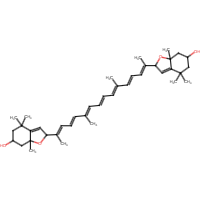 |
Chlorella pyrenoidosa Citrus sinensis L. Osbeck | Not available | It is known to possess anti-oxidant properties | Not available | Not available | Link | PubChem: 12299918 KEGG Compound: Not available |
1. Raj, H. K., & Ramamoorthy, S. (2020). Epoxy Carotenoid and Its Importance: A Review. Biology, Chemistry and Applications of Apocarotenoids, 101-126. 2. Takemura, M., Sahara, T., & Misawa, N. (2021). Violaxanthin: Natural function and occurrence, biosynthesis, and heterologous production. Applied Microbiology and Biotechnology, 105(16), 6133-6142. 3. Yaroshevich, I., Krasilnikov, P., & Rubin, A. (2015). Functional interpretation of the role of cyclic carotenoids in photosynthetic antennas via quantum chemical calculations. Computational and Theoretical Chemistry, 1070, 27-32. 4. VALADON, L. R., & MUMMERY, R. S. (1969). The Effect of Light on Carotenoids of Etiolated Mung Bean Seedlings. Journal of Experimental Botany, 20(4), 732-742. 5. Araki, MIchiko & Kaku, Naoko & Harada, Momoko & Ando, Yuka & Yamaguchi, Risa & Shindo, Kazutoshi. (2016). Structural Analysis of Acidic Derivatives (Auroxanthins) of Violaxanthin and 9-cis-Violaxanthin, and the Antioxidant Activities of Violaxanthin, 9- cis -Violaxanthin, and Auroxanthins. Journal of Agricultural and Food Chemistry. 64. | 1. Reference Link 2. Reference Link 3. Reference Link |
Not available | Not available |
| 24 | Beta-Zeacarotene | C40H58 | 538.9 g/mol | beta-Zeacarotene 7',8'-dihydro-beta,psi-carotene 7',8'-dihydro-gamma-carotene 2-[(1E,3E,5E,7E,9E,11E,13E,15E,19E)-3,7,12,16,20,24-hexamethylpentacosa-1,3,5,7,9,11,13,15,19,23-decaenyl]-1,3,3-trimethylcyclohexene 2-((1E,3E,5E,7E,9E,11E,13E,15E,19E)-3,7,12,16,20,24-hexamethylpentacosa-1,3,5,7,9,11,13,15,19,23-decaenyl)-1,3,3-trimethylcyclohexene 2-((1E,3E,5E,7E,9E,11E,13E,15E,19E)-3,7,12,16,20,24-Hexamethylpentacosa-1,3,5,7,9,11,13,15,19,23-decaen-1-yl)-1,3,3-trimethylcyclohex-1-ene |  |
Citrus sinensis L. Osbeck Mauritia vinifera Coccinella septempunctata | Not available | It is used as a colourant | 1. β-Zeacarotene → Dihydro-β-carotene Enzyme: carotenoid beta-end group lyase 2. Neurosporene → β-Zeacarotene Enzyme: carotenoid beta-end group lyase | Not available | Link | PubChem: 5280790 KEGG Compound: C05434 |
1. Petzold, E. N., Quackenbush, F. W., & McQuistan, M. (1959). Zeacarotenes, new provitamins A from corn. Archives of Biochemistry and Biophysics, 82(1), 117-124. 2. Ladygin, V. G. (2000). Biosynthesis of carotenoids in the chloroplasts of algae and higher plants. Russian Journal of Plant Physiology, 47, 796-814. | 1. Reference Link 2. Reference Link |
Not available | Not available |
| 25 | beta-cryptoxanthin | C40H56O | 552.9 g/mol | beta-Cryptoxanthin Cryptoxanthin Caricaxanthin Cryptoxanthine Cryptoxanthol beta-Caroten-3-ol Kryptoxanthin Neocryptoxanthin Xanthrophyll 1 (3R)-Cryptoxanthin Neo-beta-cryptoxanthin (3R)-beta,beta-caroten-3-ol 3-Hydroxy-beta-carotene beta,beta-Caroten-3-ol, (3R)- BETA-CRYPTOXANTHINE (1R)-3,5,5-trimethyl-4-[(1E,3E,5E,7E,9E,11E,13E,15E,17E)-3,7,12,16-tetramethyl-18-(2,6,6-trimethylcyclohexen-1-yl)octadeca-1,3,5,7,9,11,13,15,17-nonaenyl]cyclohex-3-en-1-ol CRYPTOXANTHIN (E 161C) (3R)-beta-Cryptoxanthin Cryptoxanthins Hydroxy-beta-carotene all-trans-beta-Cryptoxanthin b-Krypoxanthin beta -Cryptoxanthin b,b-Caroten-3-ol 3-Hydroxy-b-carotene beta,beta-carotene-3-ol (3R)-b,b-Caroten-3-ol) .BETA.-CAROTEN-3-OL CRYPTOXANTHIN [WHO-DD] NEO-.BETA.-CRYPTOXANTHIN 3-HYDROXY-.BETA.-CAROTENE ALL-TRANS-.BETA.-CRYPTOXANTHIN beta-CAROTEN-3-OL, (R)-ALL-TRANS- | 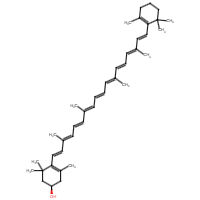 |
Thermus thermophilus Erythrobacter longus Prochloron sp. Acaryochloris marina strain MBIC 11017 Merismopedia punctata Anacystis nidulans Synechococcus leopoliensis Arthrospira sp. Oscillantoria rubescens Oscillatoria agardhii Planktothrix agardhii Microcystis aeruginosa Oscillatoria amoena Oscillatoria limosa Phormidium foveolarum Porphyra perforata Chondracanthus squarrulosus Eucheuma uncinatum Antithamnion plumula Centroceras clavulatum Polysiphonia brodiae Osmundea spectabilis Bossiella orbignyana Corallina officinalis Corallina vancouverensis Jania tenella Calliarthron tuberculosum Gelidium pusillum Gracilaria gracilis Gracilariopsis lemaneiformis Chlamydomonas reinhardtii Euglena rubida mainx Euglena gracilis var. bacillarus Euglena gracilis Hymenomonas carterae Capsicum annuum var. lycopersiciforme flavum Lycium barbarum Passiflora edulis Averrhoa carambola Diospyros kaki Carica papaya Bixa orellana Mangifera indica Citrus unshiu Citrus reticulata Citrus sinensis L. Osbeck Protousnea sp. Cladonia sp. Galleria mellonella Clione limacina Paedoclione doliiformis Limacina helicina Gymnogobius castaneus Rhacophorus bipunctatus Gallus gallus | It is involed the formation of chromoplasts during the ripening of fruits. It is also involved in photoprotection. | It is a potent anti-oxidant and is used in the treatment of obesity and cancer. It is also used as a colourant. | 1. β-Cryptoxanthin → (11Z)-Retinal Enzyme: carotenoid-15,15'-cleaving oxygenase 2. β-Cryptoxanthin → 3'-Hydroxyechinenone Enzyme: beta-carotene ketolase 3. β-Carotene → β-Cryptoxanthin Enzyme: beta-carotene 3-hydroxylase; beta-carotene 3,3'-monooxygenase | No toxic effects were observed | Patent | PubChem: 5281235 KEGG Compound: C08591 |
1. TSUSHIMA, M., MAOKA, T., KATSUYAMA, M., KOZUKA, M., MATSUNO, T., TOKUDA, H., ... & IWASHIMA, A. (1995). Inhibitory effect of natural carotenoids on Epstein-Barr virus activation activity of a tumor promoter in Raji cells. A screening study for anti-tumor promoters. Biological and Pharmaceutical Bulletin, 18(2), 227-233. 2. Takahashi, S., Iwasaki-Kino, Y., Aizawa, K., Terao, J., & Mukai, K. (2016). Development of singlet oxygen absorption capacity (SOAC) assay method using a microplate reader. Journal of AOAC International, 99(1), 193-197. 3. Takayanagi, K., Morimoto, S. I., Shirakura, Y., Mukai, K., Sugiyama, T., Tokuji, Y., & Ohnishi, M. (2011). Mechanism of visceral fat reduction in Tsumura Suzuki obese, diabetes (TSOD) mice orally administered β-cryptoxanthin from Satsuma mandarin oranges (Citrus unshiu Marc). Journal of agricultural and food chemistry, 59(23), 12342-12351. 4. Baxter, H., Puri, B., Harborne, J. B., Hall, A., & Moss, G. P. (1998). Phytochemical dictionary: a handbook of bioactive compounds from plants. CRC press. 5. Tanumihardjo, S., & Yang, Z. (2004). CAROTENOIDS | Epidemiology of Health Effects. Encyclopedia of Human Nutrition (Second Edition), 339-345. | 1. Reference Link 2. Reference Link 3. Reference Link 4. Reference Link 5. Reference Link |
Not available | Not available |
| 26 | Neoxanthin | C40H56O4 | 600.9 g/mol | Neoxanthin 9'-cis-Neoxanthin cis-Neoxanthin Neoxanthine 9-cis-Neoxanthin Foliaxanthin Trolliflor Trollixanthin (9'Z)-NEOXANTHIN 9'Z-(6R)-NEOXANTHIN (1R,3R)-6-{(3E,5E,7E,9E,11E,13E,15E,17E)-18-[(1S,4R,6R)-4-HYDROXY-2,2,6-TRIMETHYL-7-OXABICYCLO[4.1.0]HEPT-1-YL]-3,7,12,16-TETRAMETHYLOCTADECA-1,3,5,7,9,11,13,15,17-NONAENYLIDENE}-1,5,5-TRIMETHYLCYCLOHEXANE-1,3-DIOL (3S,5R,6R,3'S,5'R,6'S)-9'-cis-6,7-didehydro-5,6,5',6'-tetrahydro-5',6'-epoxy-beta,beta-carotene-3,5,3'-triol 6,7-Didehydro-5',6'-epoxy-5,5',6,6'-tetrahydro-b,b-carotene-3,3',5-triol (1R,3R)-6-((3E,5E,7E,9E,11E,13E,15E,17E)-18-((1S,4R,6R)-4-HYDROXY-2,2,6-TRIMETHYL-7-OXABICYCLO(4.1.0)HEPT-1-YL)-3,7,12,16-TETRAMETHYLOCTADECA-1,3,5,7,9,11,13,15,17-NONAENYLIDENE)-1,5,5-TRIMETHYLCYCLOHEXANE-1,3-DIOL (3S,3'S,5R,5'R,6'S,9'CIS)-6,7-DIDEHYDRO-5,5',6,6'-TETRAHYDRO-5',6'-EPOXY-.BETA.,.BETA.-CAROTENE-3,3',5-TRIOL (3S,3'S,5R,5'R,6R,6'S,8R,9'cis)-6,7-didehydro-5,5',6,6'-tetrahydro-5',6'-epoxy-beta,beta-carotene-3,3',5-triol .BETA.,.BETA.-CAROTENE, 6,7-DIDEHYDRO-5',6'-EPOXY-5,5',6,6'-TETRAHYDRO-3,3',5-TRIHYDROXY-, (3S,3'S,5R,5'R,6R,6'S,9'-CIS)- .BETA.,.BETA.-CAROTENE-3,3',5(6H)-TRIOL, 6,7-DIDEHYDRO-5',6'-EPOXY-5',6'-DIHYDRO-, (3S,3'S,5R,5'R,6R,6'S,9'-CIS)- .BETA.-CAROTENE, 6,7-DIDEHYDRO-5',6'-EPOXY-5,5',6,6'-TETRAHYDRO-3,3',5-TRIHYDROXY-, (3S,3'S,5'R,6'S)- beta,beta-Carotene, 6,7-didehydro-5',6'-epoxy-5,5',6,6'-tetrahydro-3,3',5-trihydroxy-, (3S,3'S,5R,5'R,6R,6'S,9'-cis)- neoxanthin, (trans)-isomer 9c-neoxanthin Neoxanthin (Standard) 9'-cis-Neoxanthin - solution in ethanol (sold by weight of solution) (3S,3'S,5R,5'R,6'S,9'CIS)-6,7-DIDEHYDRO-5,5',6,6'-TETRAHYDRO-5',6'-EPOXY-BETA,BETA-CAROTENE-3,3',5-TRIOL (3S,3'S,5R,5'R,6R,6'S,9'-cis)-6,7-Didehydro-5',6'-epoxy-5',6'-dihydro-?,?-carotene-3,3',5(6H)-triol (3S,5R,6R,3'S,5'R,6'S)-5',6'-EPOXY-6,7-DIDEHYDRO- 5,6,5',6'-TETRAHYDRO-.BETA.,.BETA.-CAROTENE-3,5,3'-TRIOL, 9'-CIS-NEOXANTHIN (3S,5R,6R,3'S,5'R,6'S)-5',6'-EPOXY-6,7-DIDEHYDRO-5,6,5',6'-TETRAHYDRO-.BETA.,.BETA.-CAROTENE-3,5,3'-TRIOL, 9'-CIS-NEOXANTHIN (3S,5R,6R,3'S,5'R,6'S)-5',6'-EPOXY-6,7-DIDEHYDRO-5,6,5',6'-TETRAHYDRO-BETA,BETA-CAROTENE-3,5,3'-TRIOL, 9'-CIS-NEOXANTHIN BETA,BETA-CAROTENE-3,3',5(6H)-TRIOL, 6,7-DIDEHYDRO-5',6'-EPOXY-5',6'-DIHYDRO-, (3S,3'S,5R,5'R,6R,6'S,9'-CIS)- BETA-CAROTENE, 6,7-DIDEHYDRO-5',6'-EPOXY-5,5',6,6'-TETRAHYDRO-3,3',5-TRIHYDROXY-, (3S,3'S,5'R,6'S)- | 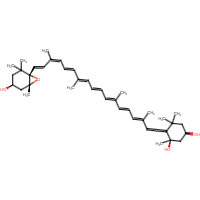 |
Pouteria sapota Chlamydomonas parkeae Chlamydomonas reinhardtii Protosiphon botryoides Ankistrodesmus spp. Pleurastrum paucicellulare Tetraselmis wettsteinii Tetraselmis sp. Oedogonium cardiacum Chara gymnophylla Chara tomentosa Chara contraria Chara hispida Chara rudis Chara globularis Chara intermedia Chara polyacantha Chara aspera Chara foetida Chara vulgaris Nitella opaca Bathycoccus prasinos Mantoniella squamata Micromonas pusilla Nephroselmis olivace Nephroselmis rotunda Nephroselmis pyriformis Prasinococcus capsulatus Pseudoscourfieldia marina Pycnococcus provasolii Pyramimonas amylifera Arousa sp. Chlorella pyrenoidosa Botryococcus braunii Botryococcus braunii Kawaguchi-1 Euglena rubida mainx Euglena gracilis var. bacillarus Euglena gracilis Euglena sanguinea Euglena viridis Eutreptiella gymnastica Ochromonas sp. Poterioochromonas malhamensis Olisthodiscus luteus Ascophyllum nodosum Fucus serratus Fucus vesiculosus Pelvetia canaliculata Laminaria saccharina Laminaria digitata Gonyostomum semen Spinacia oleracea L. Arabidopsis thaliana Coffea canephora Coffea arabica Malus domestica Mangifera indica Boronia megastigma Citrus reticulata Citrullus vulgaris Calendula officinalis Persea americana Protousnea sp. Solorina crocea Cladonia sp. | It is involved in photosynthesis | It exhibits anti-cancer and anti-microbial activities | 1. Neoxanthin → Vaucheriaxanthin Enzyme: carotenoid 19-oxygenase 2. Neoxanthin → Mimulaxanthin 3. Violaxanthin → Neoxanthin Enzyme: neoxanthin synthase; violaxanthin-neoxanthin isomerase | No toxic effects were observed | Link | PubChem: 5282217 KEGG Compound: C08606 |
1. De Las Rivas, J., Abadia, A., & Abadia, J. (1989). A new reversed phase-HPLC method resolving all major higher plant photosynthetic pigments. Plant physiology, 91(1), 190-192. 2. Gagez, A. L., Thiery, V., Pasquet, V., Cadoret, J. P., & Picot, L. (2012). Epoxycarotenoids and cancer. Review. Current Bioactive Compounds, 8(2), 109-141. 3. Molnár, P., Deli, J., Tanaka, T., Kann, Y., Tani, S., Gyémánt, N., ... & Kawase, M. (2010). Carotenoids with anti‐Helicobacter pylori activity from Golden delicious apple. Phytotherapy Research: An International Journal Devoted to Pharmacological and Toxicological Evaluation of Natural Product Derivatives, 24(5), 644-648. 4. Opriş, O., Copaciu, F., Soran, M. L., Niinemets, Ü., & Copolovici, L. (2021). Content of Carotenoids, Violaxanthin and Neoxanthin in Leaves of Triticum aestivum Exposed to Persistent Environmental Pollutants. Molecules, 26(15), 4448. 5. Parida, S., Jena, M., Behera, A. K., Mandal, A. K., Nayak, R., & Patra, S. (2024). A novel phytocolorant, neoxanthin, as a potent chemopreventive: Current progress and future prospects. Current Medicinal Chemistry, 31(32), 5149-5164. | 1. Reference Link 2. Reference Link 3. Reference Link |
prostate cancer | prostate cancer |
| 27 | Capsorubin | C40H56O4 | 600.9 g/mol | Capsorubin (3S,3'S,5R,5'R)-3,3'-DIHYDROXY-.KAPPA.,.KAPPA.-CAROTENE-6,6'-DIONE CAPSORUBIN, ALL-TRANS- (3S,3'S,5R,5'R)-3,3'-Dihydroxy-kappa,kappa-carotene-6,6'-dione (2E,4E,6E,8E,10E,12E,14E,16E,18E)-1,20-bis[(1R,4S)-4-hydroxy-1,2,2-trimethylcyclopentyl]-4,8,13,17-tetramethylicosa-2,4,6,8,10,12,14,16,18-nonaene-1,20-dione 3,3'-Dihydroxy-k,k-carotene-6,6'-dione (2E,4E,6E,8E,10E,12E,14E,16E,18E)-1,20-Bis((1R,4S)-4-hydroxy-1,2,2-trimethylcyclopentyl)-4,8,13,17-tetramethylicosa-2,4,6,8,10,12,14,16,18-nonaene-1,20-dione all-trans-capsorubin (3S,5R,3'S,5'R)-3,3'-dihydroxy-kappa,kappa-carotene-6,6'-dione .KAPPA.,.KAPPA.-CAROTENE-6,6'-DIONE, 3,3'-DIHYDROXY-, (3S,3'S,5R,5'R)- 2,4,6,8,10,12,14,16,18-EICOSANONAENE-1,20-DIONE, 1,20-BIS(4-HYDROXY-1,2,2-TRIMETHYLCYCLOPENTYL)-4,8,13,17-TETRAMETHYL-, (1R,1R,4S,4S)-(ALL-E)- 3,3'-Dihyroxy-kappa,kappa-carotene-6,6'-dione KAPPA,KAPPA-CAROTENE-6,6'-DIONE, 3,3'-DIHYDROXY-, (3S,3'S,5R,5'R)- | 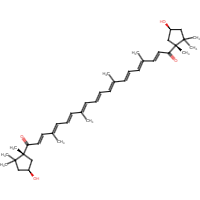 |
Capsicum annuum | It is essential for the colour of paprika. | It is known to enhance the efficiency of chemotherapy | 1. Violaxanthin → Capsorubin Enzyme: capsanthin/capsorubin synthase; violaxanthin-capsorubin isomerase 2. Capsanthin 5,6-epoxide → Capsorubin Enzyme: capsanthin 5,6-epoxide-capsorubin isomerase | Consumtion of 0–1.51 mg/kg body weight is recommended as the safe limit | Link | PubChem: 5281229 KEGG Compound: C08585 |
1. Barber, M. S., Jackman, L. M., Warren, C. K., & Weedon, B. C. L. (1961). 782. Carotenoids and related compounds. Part IX. The structures of capsanthin and capsorubin. Journal of the Chemical Society (Resumed), 4019-4024. 2. Islam, S. R., Alam, M. K., Alassod, A., Ahmed, T., Yousif, A. H., Rashid, M. M., ... & Mia, R. (2024). Natural dyes and pigments as a source of medicine. In Renewable dyes and pigments (pp. 177-232). Elsevier. 3. (2015). Scientific Opinion on the re-evaluation of paprika extract (E 160c) as a food additive. EFSA Journal, 13(12), 4320. 4. Divakaran, M., Babu, K. N., & Peter, K. V. (2022). Potential of Spices as Medicines and Immunity Boosters. In Medicinal Plants (pp. 507-520). Apple Academic Press. | 1. Reference Link 2. Reference Link 3. Reference Link 4. Reference Link |
Not available | Not available |
| 28 | Dinoxanthin | C42H58O5 | 642.9 g/mol | Dinoxanthin (3S,5R,6S,3'S,5'R,6'R)-5,6-Epoxy-3'-ethanoyloxy-6',7'-didehydro-5,6,5',6'-tetrahydro-beta,beta-carotene-3,5'-diol .BETA.,.BETA.-CAROTENE, 3-(ACETYLOXY)-6,7-DIDEHYDRO-5',6'-EPOXY-5,5',6,6'-TETRAHYDRO-3',5-DIHYDROXY-, (3S,3'S,5R,5'R,6S,6'S)- | Pavlova lutheri Gonyostomum semen Vacuolaria virescens Gymnodinum nelsoni Gymnodinum splendens Amphidinium carterae Tovellia sanguinea | It is sometimes found in the algal PSII | not available | 1. Neoxanthin → Dinoxanthin | Not available | Not available | PubChem: 6443021 KEGG Compound: not available |
1. Galasso, C., Corinaldesi, C., & Sansone, C. (2017). Carotenoids from Marine Organisms: Biological Functions and Industrial Applications. Antioxidants, 6(4), 96. 2. Takaichi, S. (2011). Carotenoids in Algae: Distributions, Biosyntheses and Functions. Marine Drugs, 9(6), 1101-1118. | 1. Reference Link 2. Reference Link |
Not available | Not available | |
| 29 | Diadinoxanthin | C40H54O3 | 582.9 g/mol | "Diadinoxanthin (1R,3S,6S)-6-[(1E,3E,5E,7E,9E,11E,13E,15E)-18-[(4R)-4-hydroxy-2,6,6-trimethylcyclohexen-1-yl]-3,7,12,16-tetramethyloctadeca-1,3,5,7,9,11,13,15-octaen-17-ynyl]-1,5,5-trimethyl-7-oxabicyclo[4.1.0]heptan-3-ol beta,beta-Carotene-3,3'-diol, 7',8'-didehydro-5,6-epoxy-5,6-dihydro-, (3S,3'R,5R,6S)- (1R,3S,6S)-6-((1E,3E,5E,7E,9E,11E,13E,15E)-18-((4R)-4-hydroxy-2,6,6-trimethylcyclohexen-1-yl)-3,7,12,16-tetramethyloctadeca-1,3,5,7,9,11,13,15-octaen-17-ynyl)-1,5,5-trimethyl-7-oxabicyclo(4.1.0)heptan-3-ol (3S,5R,6S,3'R)-5,6-Epoxy-7',8'-didehydro-5,6-dihydro-beta,beta-caroten-3,3'-diol " | 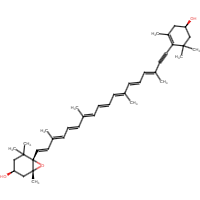 |
"Euglena gracilis Euglena sanguinea Euglena viridis Eutreptiella gymnastica Hymenomonas carterae Isochrysis galbana Pavlova lutheri Phaeocystis sp. Prymnesium parvum Pelagococcus subviridis Sarcinochrysis marina Getler Nitzschia sp. Navicula pelliculosa Phaeodactylum tricornutum Skeletonema menzelii Skeletonema costatum Thalassiosira oceanica Thalassiosira pseudonana Thalassiosira eccentrica Thalassiosira rotula Grammatophora oceanica Gonyostomum semen Vacuolaria virescens Gymnodinum nelsoni Gymnodinum splendens Amphidinium carterae Gyrodinium dorsum Glenodinium sp. Peridinium bipes Solorina crocea Corbicula clams Corbicula japonica Corbicula sandai Limacina helicina Rhinogobius brunneus " | It is known to be involved in photosynthesis and photoprotection | It is known for its anti-oxidant properties | "1. Diadinoxanthin → Heteroxanthin Enzyme: carotenoid 5,6-de-epoxidase 2. Diadinoxanthin → Diatoxanthin 3,6-epoxide Enzyme: carotenoid 3,6-epoxidase 3. Neoxanthin → Diadinoxanthin " | Not available | Link | PubChem: 6449888 KEGG Compound: C19921 |
1. Goss, R., Pinto, E. A., Wilhelm, C., & Richter, M. (2006). The importance of a highly active and ΔpH-regulated diatoxanthin epoxidase for the regulation of the PS II antenna function in diadinoxanthin cycle containing algae. Journal of plant physiology, 163(10), 1008-1021. 2. Galasso, C., Corinaldesi, C., & Sansone, C. (2017). Carotenoids from Marine Organisms: Biological Functions and Industrial Applications. Antioxidants, 6(4), 96. 3. Takaichi, S. (2011). Carotenoids in Algae: Distributions, Biosyntheses and Functions. Marine Drugs, 9(6), 1101-1118. 4. Pistelli, L., Sansone, C., Smerilli, A., Festa, M., Noonan, D. M., Albini, A., & Brunet, C. (2021). MMP-9 and IL-1? As Targets for Diatoxanthin and Related Microalgal Pigments: Potential Chemopreventive and Photoprotective Agents. Marine Drugs, 19(7), 354. | 1. Reference Link 2. Reference Link3. Reference Link 4. Reference Link |
Not available | Not available |